Pay 50% Now, Pay 50% After Placement
Python Full Stack Development
Home - Course Details
AI-Powered Full Stack Development Program
Don’t Just Be a Coder. Become an AI-Powered Full Stack Developer..!
At Fullstack Experts Academy, we go beyond traditional coding education to shape future-ready developers. Our program is designed to help you build intelligent, scalable, and production-ready applications by combining full stack expertise with the power of AI
- Anyone can learn syntax. Very few can build intelligent, scalable, production-ready systems.
- This program transforms you from a basic coder into a job-ready, AI-integrated full stack developer
Student-Friendly Payment Option
We are aligned with your success. You pay half the program fee to start. The remaining 50% is payable after your secure placement.
Your success is our priority.
Live Projects & Case Studies
Expert Mentors from Industry
Internship & Placement Support
Talk to our career expert

Learn from 50+ Industry Experts
Train under 50+ experienced industry professionals who actively work in leading tech companies, build scalable applications, and understand current hiring standards. Gain practical insights, hands-on exposure, and mentorship focused on real-world execution. This is not theory-based learning—it’s industry-driven training designed to make you job-ready.

Why Choose Fullstack Experts Academy?
500+ Hiring Companies
Connect with a wide network of 500+ top companies actively hiring skilled full stack developers.
Paid & Free
Internships
Gain real-world experience through industry-focused structured paid and free internship opportunities.
Industry Expert Training
Learn directly from professionals working in leading tech companies with practical insights.
Hackathons & Coding Challenges
Participate in competitive hackathons to enhance problem-solving and teamwork skills.
Mock Interviews
Prepare confidently with technical and HR mock interviews aligned to hiring standards.
Placement
Drives
Get exclusive access to placement drives and recruitment opportunities.
1-on-1
Mentoring
Receive personalized guidance and career support from experienced mentors.
Deep-Dive
Curriculum
Master concepts thoroughly with a comprehensive, industry-focused curriculum.
Trusted by 500+ Hiring Companies














Frontend Development
Master modern UI technologies to build responsive, interactive, and user-friendly web applications.
Backend Development
Develop secure, scalable server-side applications using industry-standard frameworks and tools.
Database Management
Learn to design, manage, and optimize databases for high-performance applications.
End-to-End Development
Gain complete expertise in building, deploying, and managing full stack applications from start to finish.
Learn Full Stack Development
Full Stack Training at Fullstack Experts Academy
At Fullstack Experts Academy, our Full Stack Development Programs in Java, Python, and MERN Stack with DSA + Gen AI are designed to build complete, job-ready developers. Master front-end and back-end technologies, strengthen your problem-solving skills with Data Structures & Algorithms, and integrate Generative AI tools into real-world applications. With hands-on projects, expert mentorship, and industry-focused training, you gain the skills, confidence, and practical exposure needed to succeed in today’s competitive tech landscape.
Train under experienced professionals working in real tech companies
Learn from experts who build scalable, production-ready applications
Understand current industry hiring standards and expectations
Receive mentorship with practical, real-world insights
Gain hands-on, execution-focused training
Experience industry-driven learning, not theory-based teaching
Don’t Just Be a Coder.
Become an AI-Powered Full Stack Developer.
At Full Stack Experts Academy, we go beyond traditional coding education to shape future-ready developers. Our program is designed to help you build intelligent, scalable, and production-ready applications by combining full stack expertise with the power of AI
- Anyone can learn syntax. Very few can build intelligent, scalable, production-ready systems.
- This program transforms you from a basic coder into a job-ready, AI-integrated full stack developer
What Makes us Different?
Industry-Driven, Not Just Theory-Based
AI-Integrated Full Stack Training
Real-Time Project Execution Model
Placement-Focused Learning Approach
Mentorship from Working Tech Professionals
Industry-Oriented Curriculum
Our curriculum is carefully designed according to current industry standards, trending technologies, and real-world job requirements to make you career-ready.
Hands-on Live Projects
Gain practical exposure by working on real-time, end-to-end projects that build your confidence and strengthen your application development skills.
Expert Trainers & Mentors
Learn from experienced industry professionals who provide continuous guidance, technical support, and practical insights at every stage of your journey.
Placement Preparation & Support
Receive comprehensive placement assistance including resume building, GitHub profile enhancement, mock interviews, aptitude training, and dedicated job support.
Choose Your Technology Stack
Select your preferred stack and gain hands-on, industry-ready full stack development skills with real-world project experience.
Java Full stack with DSA + Gen AI Curriculum
Programming & Development Basics: Programming intro, SDLC overview, and workflow basics.
VS Code Setup & Interface: Installation, extensions, themes, explorer, and terminal configuration.
Project & File Management: Folder structure, file creation, and professional workspace setup.
Command Line & Git Fundamentals: Terminal commands, navigation, Git basics, and workflow.
Git Commands & GitHub: Init, add, commit, push, pull, clone, branching, and merging.
First Project Execution: Run code, environment setup, and basic testing. |
HTML Basics: Inline elements, Block elements, Element attributes
HTML Forms:HTML forms and form elements, Types of inputs, Buttons
HTML Media & Links: Anchor tags, Images, Video
HTML Meta & Utility Tags: Meta tags, Miscellaneous tags (code, table, span, etc.)
CSS Fundamentals: Cascading, CSS selectors
CSS Selectors: Element selectors, Pseudo selectors, Attribute selectors
CSS Colors & Backgrounds: CSS colors, Color picker, Gradients, Background properties
CSS Box Model: Box model, Padding, Margin, Border
CSS Layout & Alignment: CSS alignment, Flexbox, Grid, Positioning
Advanced CSS: CSS transformations, iFrames, Animations, Webkit & keyframes.
Bootstrap (Responsive UI Development)
Bootstrap Basics: Bootstrap introduction, paragraphs, alignments
Typography & Content: Quotes, Lists, Code blocks, Keyboard elements
Contextual Styling: Contextual classes, Labels
Buttons & Forms: Buttons, Links, Submit buttons, Forms
Data Display: Tables, List groups, List group items
Navigation Components: Pagination
UI Feedback Components: Alerts, Panels, Wells, Progress bar
Grid System: Bootstrap grid system and responsive layouts
|
JavaScript Programming
JavaScript Fundamentals (ES6): Variables, data types, operators, control flow
Functions & OOP: JavaScript functions, Arrow functions, Classes, OOP concepts
DOM Manipulation: DOM access, DOM manipulation
Events: DOM events and event handling
Higher Order Functions: forEach, map, filter, reduce
JavaScript Best Practices: Tips and tricks for clean and efficient JS code
AJAX & API Integration
Client–Server Architecture: Introduction to client-server model
Data Formats: XML and JSON APIs
Fundamentals: Introduction to APIs
API Testing: Testing APIs using Postman
Asynchronous Communication: Async programming concepts
Frontend API Integration: Consuming APIs in frontend applications
|
React.js Development
React Basics: Creating React app, Folder structure
Components: Understanding components, Functional components, Class components
JSX & Events: JSX syntax, Event handling
Props & State: Working with props, State management
Forms & Inputs: Handling user inputs, Adding forms
Lifecycle & Hooks: Component lifecycle, React Hooks (useState, useEffect)
HTTP Communication: Making HTTP requests using Axios
Routing: Routing in React
Context & State Management: React Context API
Advanced State Management: Redux, Redux middleware (Thunk, Logger)
Third-party Integrations: Using third-party APIs
Front End Development Project
Frontend Capstone Project: End-to-end frontend application using HTML, CSS, JavaScript, React
API Integration Project: Integrating third-party APIs
State Management Implementation: Redux-based state management
Deployment Readiness: Project structure, optimization, best practices
|
Java Programming & Problem Solving
Java Environment Setup: Download and install IntelliJ IDEA, Install and configure Java JDK 8
Java Program Structure: Understanding Java program execution flow
Java Intermediate Programming
OOP Principles: Inheritance, Polymorphism, Encapsulation, Abstraction
|
Java Exception Handling
Exception Handling Basics: Introduction to exception handling
Exception Types: Checked exceptions, unchecked exceptions
Exception Hierarchy: Exception trees and hierarchy
Errors vs Exceptions: Differences between errors and exceptions
Handling Exceptions: try, catch, finally blocks
Custom Exceptions: Creating and throwing user-defined exceptions
File Handling
Frontend Capstone Project: End-to-end frontend application using HTML, CSS, JavaScript, React
API Integration Project: Integrating third-party APIs
State Management Implementation: Redux-based state management
Deployment Readiness: Project structure, optimization, best practices
|
Databases (MySQL)
Database Fundamentals: Introduction to databases
Relational Databases: RDBMS concepts
Database Creation: Creating databases and tables
CRUD Operations: Insert, Select, Update, Delete
Querying Data: WHERE clause, ORDER BY, GROUP BY
Joins: Inner join, Left join, Right join
Advanced Queries: Subqueries and complex joins
JDBC & Database Connectivity
APIs Basics: Introduction to APIs
Java Backend
Introduction to the Web
Web Fundamentals: Hypertext Transfer Protocol (HTTP)
Backend Design Patterns
Design Patterns Overview: Introduction and utility of design patterns
Servlets, JSP & Servlet Containers
Servlets Introduction: What are servlets and their use cases
|
Spring Boot Framework
Spring Boot Overview: Introduction to application development using Spring Boot
Object Relational Mapping (ORM)
ORM Fundamentals: Introduction to Object Relational Mapping
User Authentication
Project – Blogging Application using Spring Boot
Application Design: Designing UML for the application
|
Arrays
Array Fundamentals: Introduction to arrays, memory layout
Bit Manipulation
Bitwise Basics: AND, OR, XOR, NOT
Searching & Sorting
Linear & Binary Search: Search techniques and applications
Recursion & Backtracking
Recursion Basics: Function calls and call stack
Hashing
Hashing Fundamentals: Hash functions and hash tables
Stacks
Stack Fundamentals: LIFO principle
Queues
Queue Fundamentals: FIFO principle
Linked Lists
Linked List Basics: Singly and doubly linked lists
TreesTree Fundamentals: Tree terminology
Heaps
Heap Fundamentals: Min heap and max heap
Greedy Programming
Greedy Strategy: Making locally optimal choices
Dynamic Programming
DP Fundamentals: Overlapping subproblems
Graphs
Graph Fundamentals: Graph representations
|
Introduction to Generative AI: AI basics, GenAI overview, real-world use cases
AI Tools in Development: GitHub Copilot in VS Code, AI coding assistants, productivity workflows
Prompt Engineering: Prompt structure, instruction tuning, context design, output control
|
Quantitative Aptitude Basics:
Arithmetic Problem Solving:
Logical Reasoning:
Analytical Thinking:
Data Interpretation:
Placement Test Strategies:
|
Self-Awareness & Personal Branding: Self-Introduction Mastery: Communication & Professional Etiquette: Public Speaking, Presentation & JAM: Group Discussion Excellence: Interview Skills & FAQs: LinkedIn Profile & Resume Building: Mock Interviews & Time Management: |
Python Full stack with DSA + Gen AI Curriculum
Programming & Development Basics: Programming intro, SDLC overview, and workflow basics.
VS Code Setup & Interface: Installation, extensions, themes, explorer, and terminal configuration.
Project & File Management: Folder structure, file creation, and professional workspace setup.
Command Line & Git Fundamentals: Terminal commands, navigation, Git basics, and workflow.
Git Commands & GitHub: Init, add, commit, push, pull, clone, branching, and merging.
First Project Execution: Run code, environment setup, and basic testing. |
HTML Basics: Inline elements, Block elements, Element attributes
HTML Forms:HTML forms and form elements, Types of inputs, Buttons
HTML Media & Links: Anchor tags, Images, Video
HTML Meta & Utility Tags: Meta tags, Miscellaneous tags (code, table, span, etc.)
CSS Fundamentals: Cascading, CSS selectors
CSS Selectors: Element selectors, Pseudo selectors, Attribute selectors
CSS Colors & Backgrounds: CSS colors, Color picker, Gradients, Background properties
CSS Box Model: Box model, Padding, Margin, Border
CSS Layout & Alignment: CSS alignment, Flexbox, Grid, Positioning
Advanced CSS: CSS transformations, iFrames, Animations, Webkit & keyframes.
Bootstrap (Responsive UI Development)
Bootstrap Basics: Bootstrap introduction, paragraphs, alignments
Typography & Content: Quotes, Lists, Code blocks, Keyboard elements
Contextual Styling: Contextual classes, Labels
Buttons & Forms: Buttons, Links, Submit buttons, Forms
Data Display: Tables, List groups, List group items
Navigation Components: Pagination
UI Feedback Components: Alerts, Panels, Wells, Progress bar
Grid System: Bootstrap grid system and responsive layouts
|
JavaScript Programming
JavaScript Fundamentals (ES6): Variables, data types, operators, control flow
Functions & OOP: JavaScript functions, Arrow functions, Classes, OOP concepts
DOM Manipulation: DOM access, DOM manipulation
Events: DOM events and event handling
Higher Order Functions: forEach, map, filter, reduce
JavaScript Best Practices: Tips and tricks for clean and efficient JS code
AJAX & API Integration
Client–Server Architecture: Introduction to client-server model
Data Formats: XML and JSON APIs
Fundamentals: Introduction to APIs
API Testing: Testing APIs using Postman
Asynchronous Communication: Async programming concepts
Frontend API Integration: Consuming APIs in frontend applications
|
React.js Development
React Basics: Creating React app, Folder structure
Components: Understanding components, Functional components, Class components
JSX & Events: JSX syntax, Event handling
Props & State: Working with props, State management
Forms & Inputs: Handling user inputs, Adding forms
Lifecycle & Hooks: Component lifecycle, React Hooks (useState, useEffect)
HTTP Communication: Making HTTP requests using Axios
Routing: Routing in React
Context & State Management: React Context API
Advanced State Management: Redux, Redux middleware (Thunk, Logger)
Third-party Integrations: Using third-party APIs
Front End Development Project
Frontend Capstone Project: End-to-end frontend application using HTML, CSS, JavaScript, React
API Integration Project: Integrating third-party APIs
State Management Implementation: Redux-based state management
Deployment Readiness: Project structure, optimization, best practices
|
Python Programming Foundations
Python Environment Setup: Installing Python, Setting up VS Code / PyCharm, Virtual environments
Python Intermediate Programming
OOP Principles: Inheritance, Polymorphism, Encapsulation, Abstraction
|
Advanced Python Concepts
File Handling
File Handling Basics: Introduction to file handling
|
Databases (MySQL / PostgreSQL)
Database Fundamentals: Introduction to databases
Relational Databases: RDBMS concepts
Database Creation: Creating databases and tables
CRUD Operations: Insert, Select, Update, Delete
Querying Data: WHERE clause, ORDER BY, GROUP BY
Joins: Inner join, Left join, Right join
Advanced Queries: Subqueries and complex joins
Database Connectivity (Python ORM & DB APIs)
APIs Basics: Introduction to APIs
|
Introduction to the Web
Web Fundamentals: Hypertext Transfer Protocol (HTTP)
Backend Design Patterns
Design Patterns Overview: Introduction and utility of design patterns
|
Arrays
Array Fundamentals: Introduction to arrays, memory layout
Bit Manipulation
Bitwise Basics: AND, OR, XOR, NOT
Searching & Sorting
Linear & Binary Search: Search techniques and applications
Recursion & Backtracking
Recursion Basics: Function calls and call stack
Hashing
Hashing Fundamentals: Hash functions and hash tables
Stacks
Stack Fundamentals: LIFO principle
Queues
Queue Fundamentals: FIFO principle
Linked Lists
Linked List Basics: Singly and doubly linked lists
TreesTree Fundamentals: Tree terminology
Heaps
Heap Fundamentals: Min heap and max heap
Greedy Programming
Greedy Strategy: Making locally optimal choices
Dynamic Programming
DP Fundamentals: Overlapping subproblems
Graphs
Graph Fundamentals: Graph representations
|
Introduction to Generative AI: AI basics, GenAI overview, real-world use cases
AI Tools in Development: GitHub Copilot in VS Code, AI coding assistants, productivity workflows
Prompt Engineering: Prompt structure, instruction tuning, context design, output control
|
Quantitative Aptitude Basics:
Arithmetic Problem Solving:
Logical Reasoning:
Analytical Thinking:
Data Interpretation:
Placement Test Strategies:
|
Self-Awareness & Personal Branding: Self-Introduction Mastery: Communication & Professional Etiquette: Public Speaking, Presentation & JAM: Group Discussion Excellence: Interview Skills & FAQs: LinkedIn Profile & Resume Building: Mock Interviews & Time Management: |
MERN Full stack with DSA + Gen AI Curriculum
Programming & Development Basics: Programming intro, SDLC overview, and workflow basics.
VS Code Setup & Interface: Installation, extensions, themes, explorer, and terminal configuration.
Project & File Management: Folder structure, file creation, and professional workspace setup.
Command Line & Git Fundamentals: Terminal commands, navigation, Git basics, and workflow.
Git Commands & GitHub: Init, add, commit, push, pull, clone, branching, and merging.
First Project Execution: Run code, environment setup, and basic testing. |
HTML Basics: Inline elements, Block elements, Element attributes
HTML Forms:HTML forms and form elements, Types of inputs, Buttons
HTML Media & Links: Anchor tags, Images, Video
HTML Meta & Utility Tags: Meta tags, Miscellaneous tags (code, table, span, etc.)
CSS Fundamentals: Cascading, CSS selectors
CSS Selectors: Element selectors, Pseudo selectors, Attribute selectors
CSS Colors & Backgrounds: CSS colors, Color picker, Gradients, Background properties
CSS Box Model: Box model, Padding, Margin, Border
CSS Layout & Alignment: CSS alignment, Flexbox, Grid, Positioning
Advanced CSS: CSS transformations, iFrames, Animations, Webkit & keyframes.
Bootstrap (Responsive UI Development)
Bootstrap Basics: Bootstrap introduction, paragraphs, alignments
Typography & Content: Quotes, Lists, Code blocks, Keyboard elements
Contextual Styling: Contextual classes, Labels
Buttons & Forms: Buttons, Links, Submit buttons, Forms
Data Display: Tables, List groups, List group items
Navigation Components: Pagination
UI Feedback Components: Alerts, Panels, Wells, Progress bar
Grid System: Bootstrap grid system and responsive layouts
|
JavaScript Programming
JavaScript Fundamentals (ES6): Variables, data types, operators, control flow
Functions & OOP: JavaScript functions, Arrow functions, Classes, OOP concepts
DOM Manipulation: DOM access, DOM manipulation
Events: DOM events and event handling
Higher Order Functions: forEach, map, filter, reduce
JavaScript Best Practices: Tips and tricks for clean and efficient JS code
AJAX & API Integration
Client–Server Architecture: Introduction to client-server model
Data Formats: XML and JSON APIs
Fundamentals: Introduction to APIs
API Testing: Testing APIs using Postman
Asynchronous Communication: Async programming concepts
Frontend API Integration: Consuming APIs in frontend applications
|
React.js Development
React Basics: Creating React app, Folder structure
Components: Understanding components, Functional components, Class components
JSX & Events: JSX syntax, Event handling
Props & State: Working with props, State management
Forms & Inputs: Handling user inputs, Adding forms
Lifecycle & Hooks: Component lifecycle, React Hooks (useState, useEffect)
HTTP Communication: Making HTTP requests using Axios
Routing: Routing in React
Context & State Management: React Context API
Advanced State Management: Redux, Redux middleware (Thunk, Logger)
Third-party Integrations: Using third-party APIs
Front End Development Project
Frontend Capstone Project: End-to-end frontend application using HTML, CSS, JavaScript, React
API Integration Project: Integrating third-party APIs
State Management Implementation: Redux-based state management
Deployment Readiness: Project structure, optimization, best practices
|
Java Programming & Problem Solving
Java Environment Setup: Download and install IntelliJ IDEA, Install and configure Java JDK 8
Java Program Structure: Understanding Java program execution flow
Java Intermediate Programming
OOP Principles: Inheritance, Polymorphism, Encapsulation, Abstraction
|
Node.js Introduction: What is Node.js, V8 engine, Node vs browser JS, Blocking vs non-blocking, Event loop overview
Node Runtime & Globals: global object, process object, __dirname / __filename, environment variables, CLI arguments
Module System: require(), module.exports, import/export, CommonJS vs ES Modules, npm & package.json
Core Modules: fs module (read/write), path module, os module, events module, synchronous vs async APIs
File System Deep Dive: reading files async, writing files, append, streams basics, buffers intro
HTTP Server: http module, request lifecycle, routing manually, headers, status codes
Async Programming: callbacks, promises, async/await, error handling, async flow control
Events & Streams :EventEmitter, custom events, streams types, piping, backpressure concept
Node Architecture: single thread model, worker threads intro, libuv overview, concurrency vs parallelism, scalability concepts
Mini Project: file-based API, routing, async FS, JSON handling, testing endpoints
|
Express.js Introduction
Express Intro: What is Express, Setup server, Routing basics, req/res, JSON responses
Middleware
Middleware fundamentals: middleware flow, next(), built-in middleware, express.json, static middleware
MVC Structure
Project architecture: MVC pattern, controllers
Validation & Error Handling
Validation libraries: validation concept, schema validation, sanitization, error responses, reusable validators
Api's
REST principles: resources, HTTP verbs, status codes, statelessness, naming conventions
|
MongoDB Introduction
Database Intro: SQL vs NoSQL, Mongo architecture, collections, documents, BSON
CRUD
Create & Read: insertOne / insertMany, document structure, find(), filters, projections
Advanced
Relationships & Schema Design: embedding vs referencing, ObjectId references, one-to-many, many-to-many, schema design patterns
Aggregation Pipeline: aggregation concept, pipeline stages, $match, $group, $project, $sort / $limit, $lookup
|
Arrays
Array Fundamentals: Introduction to arrays, memory layout
Bit Manipulation
Bitwise Basics: AND, OR, XOR, NOT
Searching & Sorting
Linear & Binary Search: Search techniques and applications
Recursion & Backtracking
Recursion Basics: Function calls and call stack
Hashing
Hashing Fundamentals: Hash functions and hash tables
Stacks
Stack Fundamentals: LIFO principle
Queues
Queue Fundamentals: FIFO principle
Linked Lists
Linked List Basics: Singly and doubly linked lists
TreesTree Fundamentals: Tree terminology
Heaps
Heap Fundamentals: Min heap and max heap
Greedy Programming
Greedy Strategy: Making locally optimal choices
Dynamic Programming
DP Fundamentals: Overlapping subproblems
Graphs
Graph Fundamentals: Graph representations
|
Introduction to Generative AI: AI basics, GenAI overview, real-world use cases
AI Tools in Development: GitHub Copilot in VS Code, AI coding assistants, productivity workflows
Prompt Engineering: Prompt structure, instruction tuning, context design, output control
|
Quantitative Aptitude Basics:
Arithmetic Problem Solving:
Logical Reasoning:
Analytical Thinking:
Data Interpretation:
Placement Test Strategies:
|
Self-Awareness & Personal Branding:
Self-Introduction Mastery:
Communication & Professional Etiquette:
Public Speaking, Presentation & JAM:
Group Discussion Excellence:
Interview Skills & FAQs:
LinkedIn Profile & Resume Building:
Mock Interviews & Time Management: |
Tools you will Master












Real World, Industry Focused Projects

E-Commerce Web Application
Build a complete online shopping platform with product listings, cart management, and payment integration. Gain hands-on experience with backend APIs and front-end UI.

Social Media Platform
Create a social networking site with features like user authentication, posts, comments, likes, and real-time notifications using MERN stack.

Task Management App
Develop a productivity app for managing tasks, projects, and deadlines. Implement CRUD operations, user authentication, and responsive design.

Online Learning Portal
Build a platform for online courses where users can register, enroll, and track progress. Integrate video streaming, course ratings, and progress dashboards.

Real-Time Chat Application
Create a messaging app with live chat features using WebSockets, along with user login and group chat functionalities.

Job Portal Platform
Design a platform where users can browse job listings, apply, and manage applications. Admins can post jobs and track candidates.
Success Stories from Our Student's
Fullstack Experts Academy truly helped me move beyond basic coding. The AI-powered full stack training gave me hands-on experience in building scalable, production-ready applications. Today, I confidently call myself a job-ready developer.
Karthik R
The combination of Java/Python stack with DSA and Generative AI made this program stand out. The real-time projects and expert mentorship helped me understand how real tech companies build applications.
Sneha V
The 50% now, 50% after placement model shows how much the academy believes in students’ success. They genuinely align with our career goals and provide full support until placement.
Ananya M
From frontend to backend, DSA to AI integration, everything was structured perfectly. The deep-dive curriculum and practical exposure helped me crack interviews and secure opportunities
Vikram P
What impressed me most was the industry-driven approach. This is not theory-based training — we actually built live projects and integrated AI tools. The experience completely transformed my confidence.
Rahul S
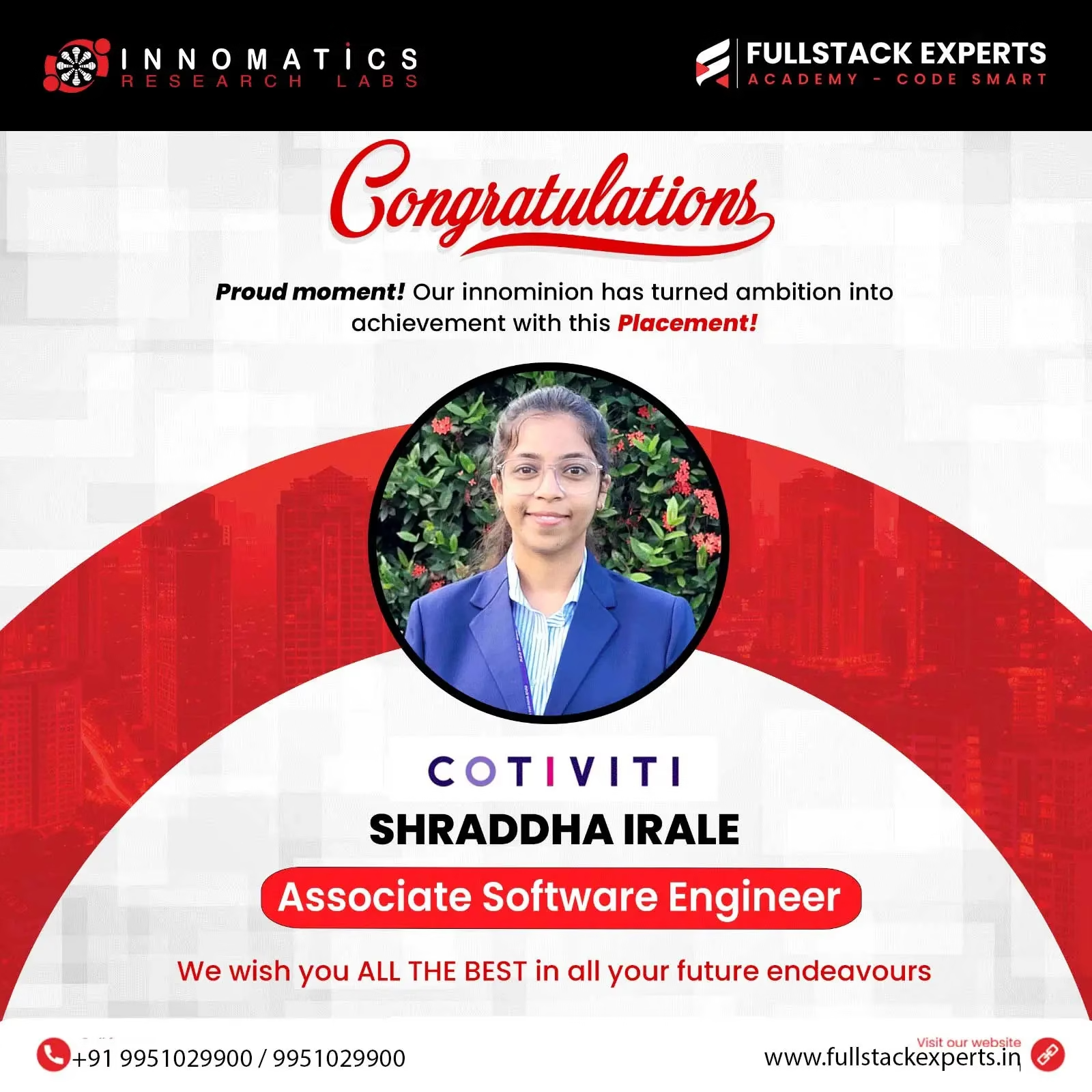
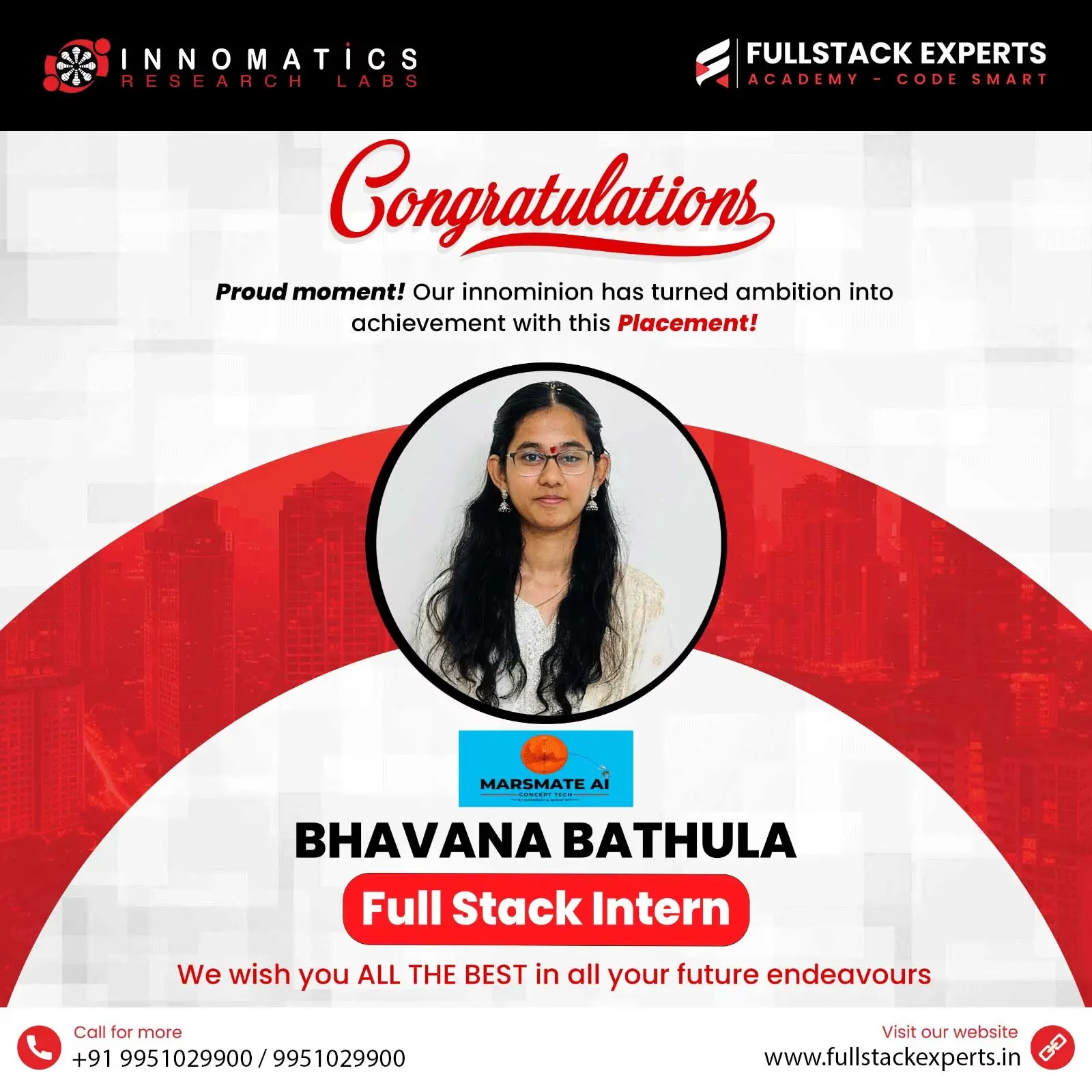
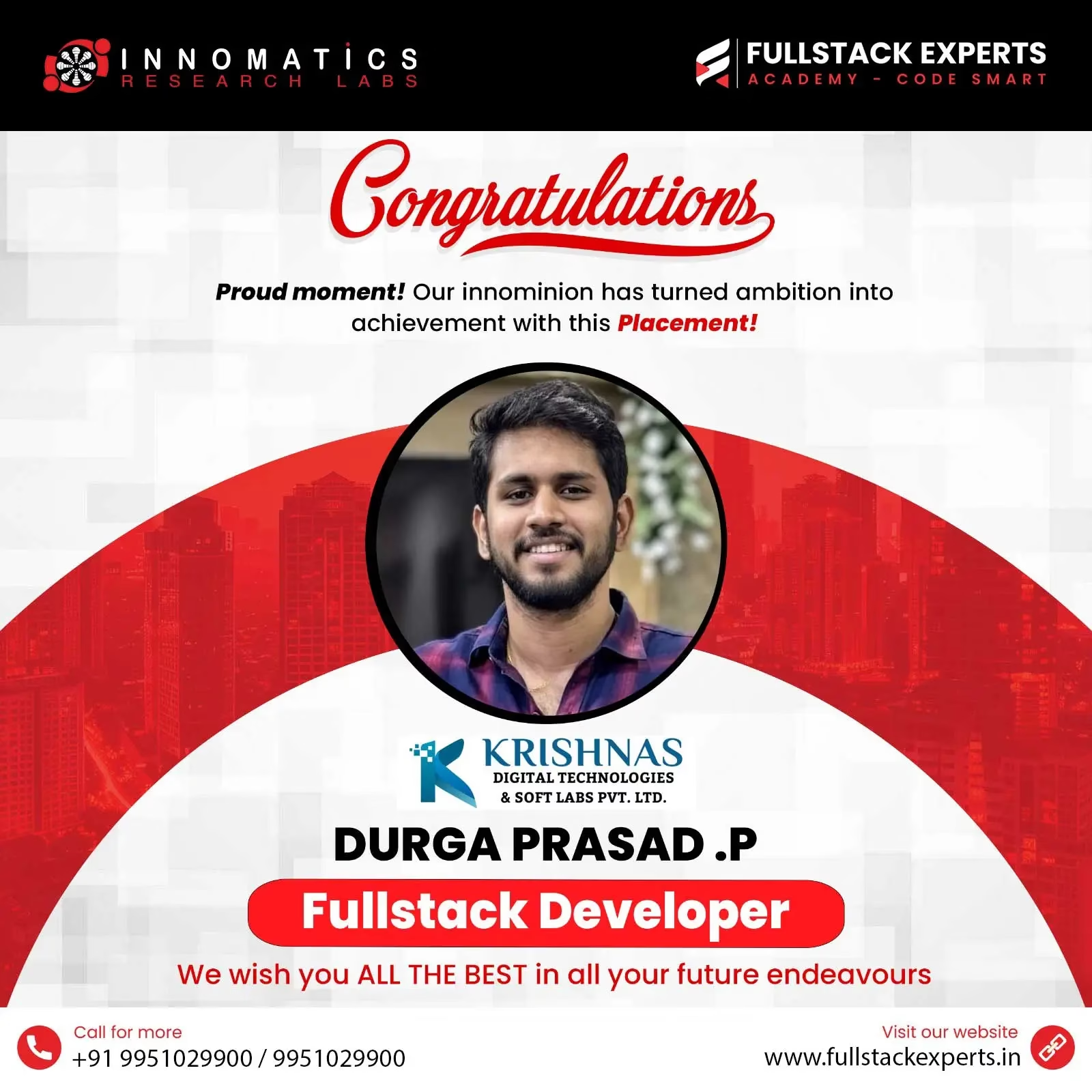
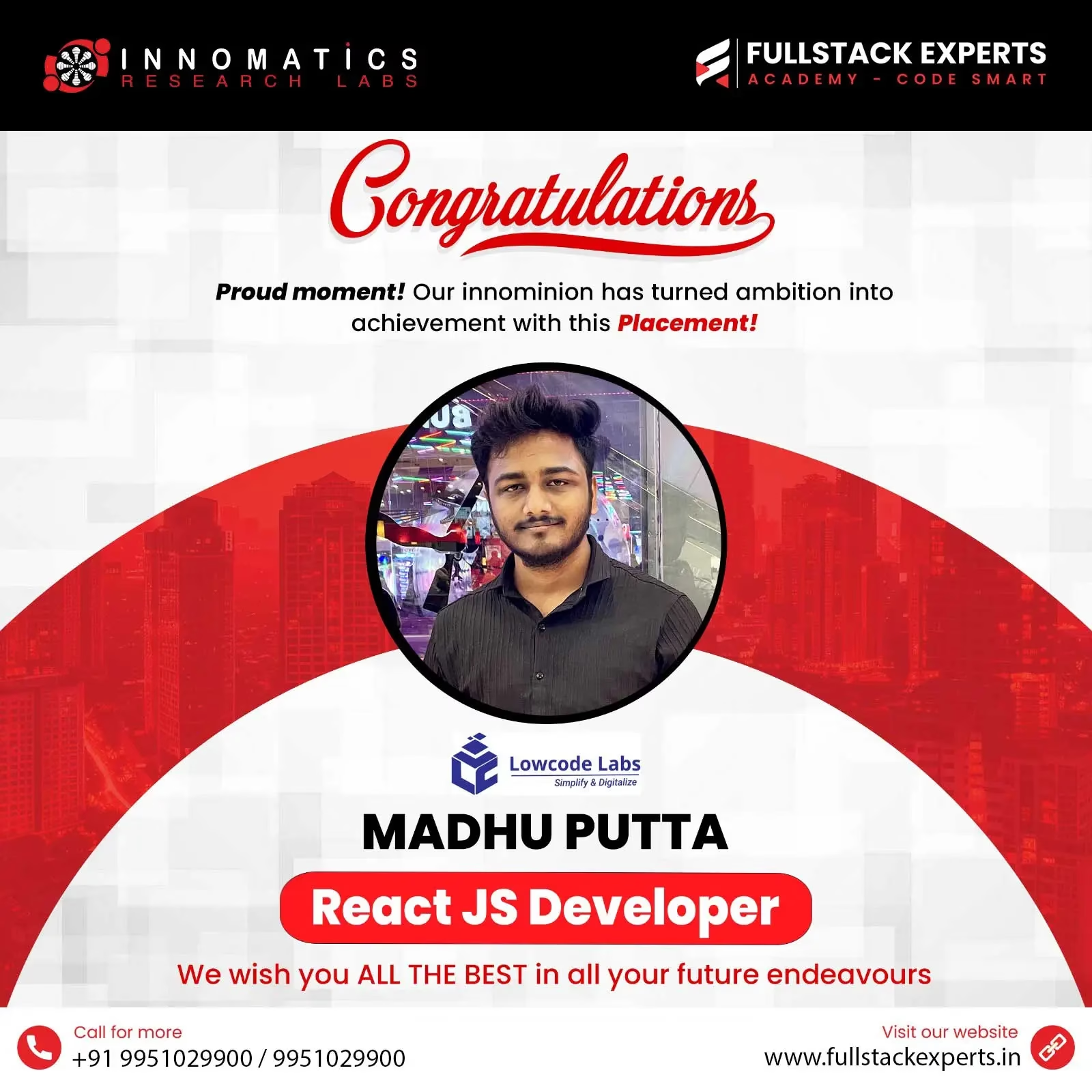
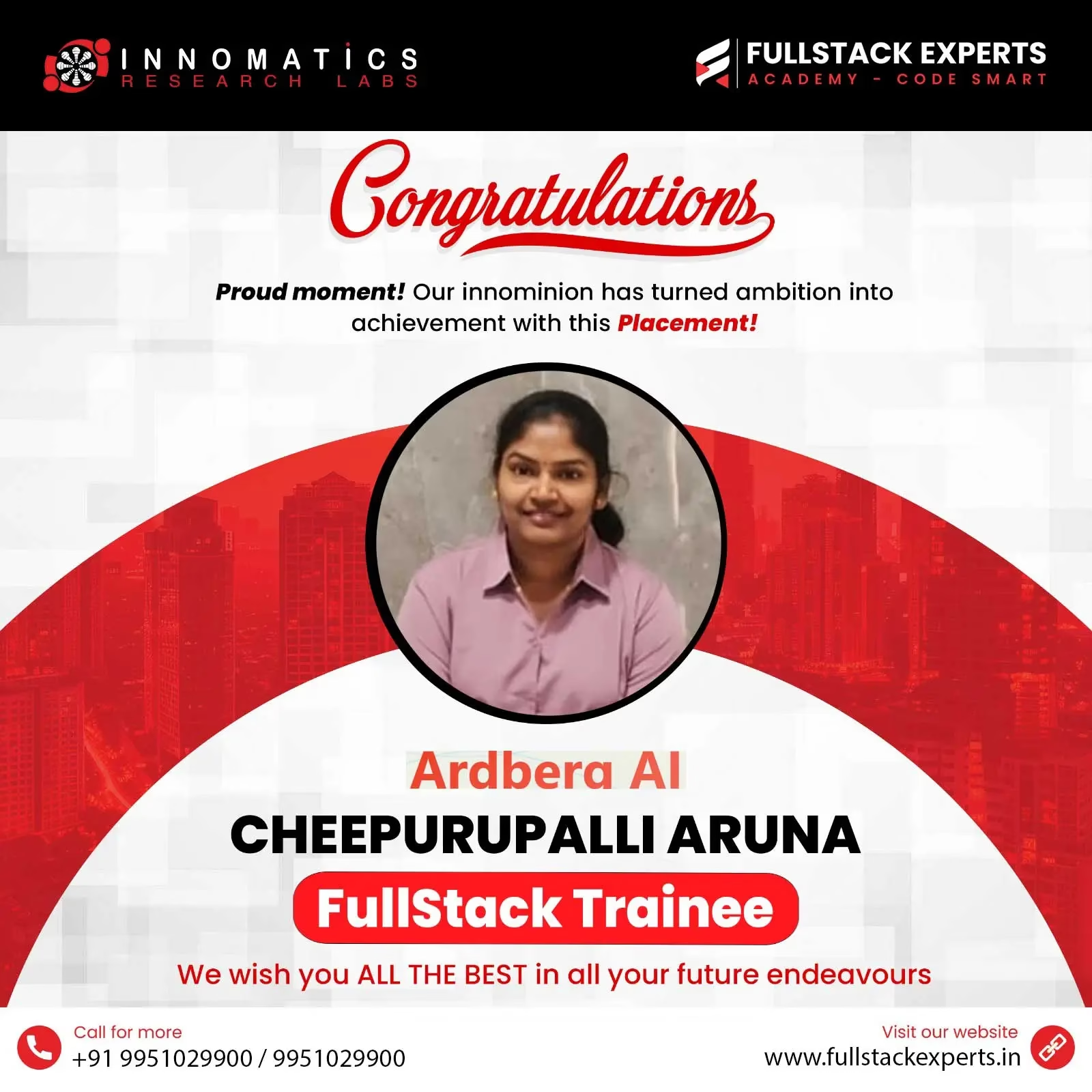
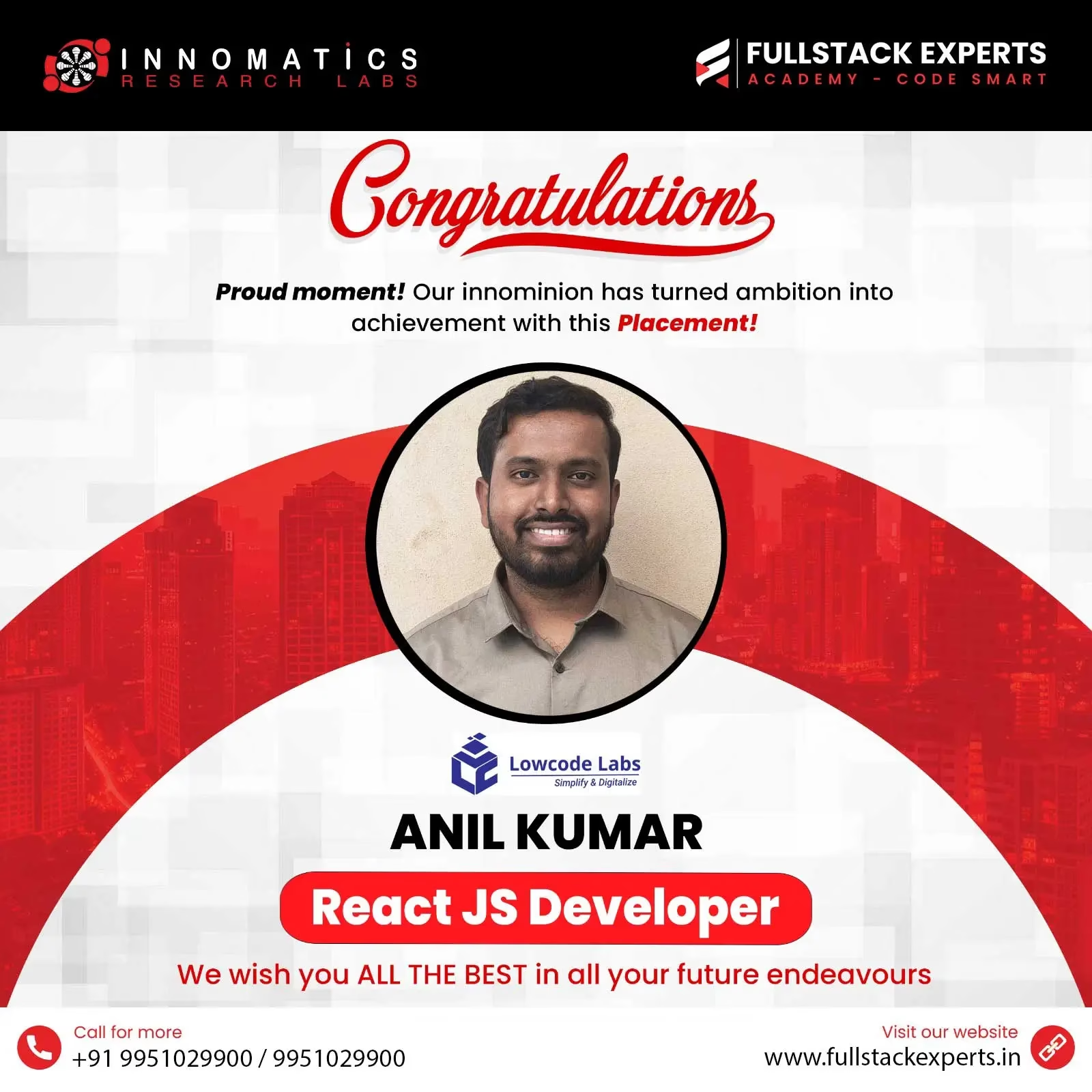
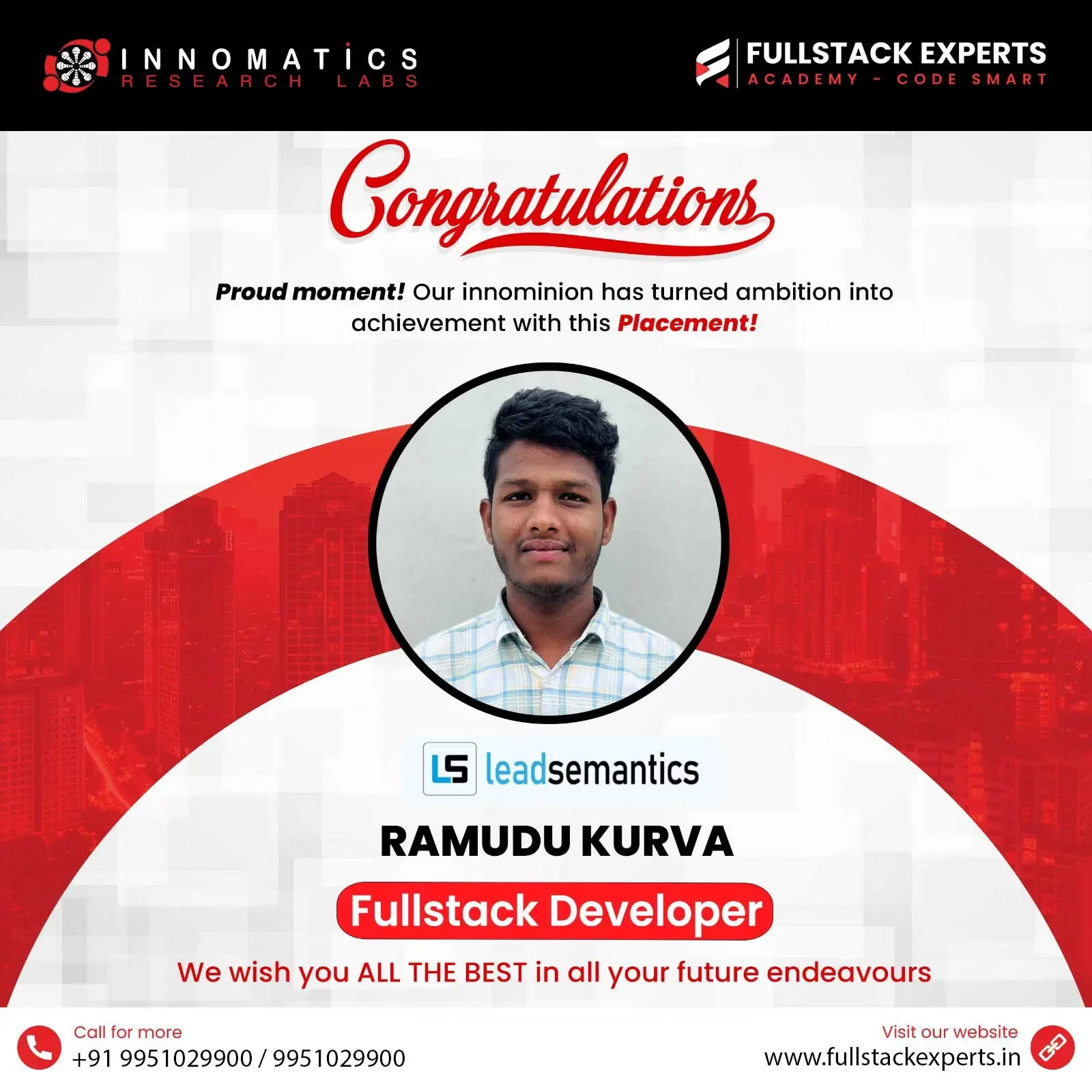
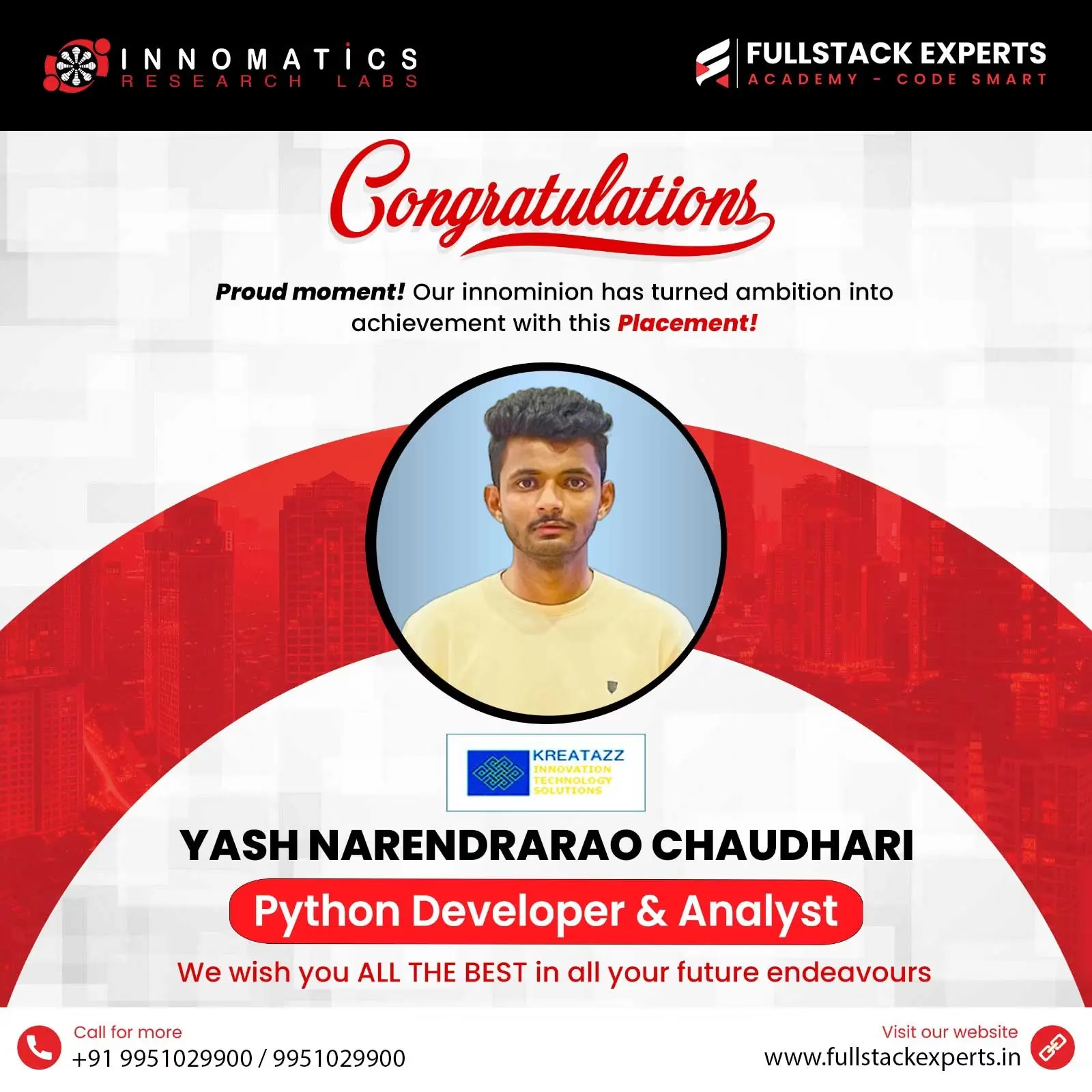
Students Excelling in Top Companies
General Queries & Answers
The program covers Java, Python, MERN stack, Data Structures & Algorithms (DSA), and AI integration to build modern, industry-ready applications.
Yes, the curriculum is designed for beginners as well as professionals, starting from fundamentals and progressing to advanced full stack development.
Absolutely. You will work on real-time projects and live applications to gain practical industry exposure.
Yes, AI-powered development is a key focus, helping you integrate Generative AI tools into full stack applications.
Yes. Full Stack Experts Academy provides structured placement assistance, including:
- Resume building and LinkedIn profile optimization
- Coding interview preparation
- Mock interviews and technical evaluations
- Referral support and job readiness training
The integrated Full Stack + DSA + Generative AI curriculum, combined with live mentorship and continuous practice, makes this program industry-aligned and career-focused.
You will build real-world applications such as web platforms, APIs, and AI-driven solutions to strengthen your portfolio.
Yes, upon successful completion, you will receive a certification recognizing your skills and expertise.
Python Fullstack with DSA + Gen AI
- 10 Modules
- 50+ Batches
Advanced Python Full Stack Career Program
Python Fullstack with DSA + Gen AI is a career-oriented program that combines full stack development, advanced Data Structures & Algorithms, and Generative AI to build industry-ready developers. Gain hands-on experience in Python, Django / Flask, React, databases, APIs, and AI-powered tools while working on real-time projects and coding challenges to confidently crack top company placements.
What You’ll Learn
- Python Programming : Syntax, control flow, OOP principles, advanced concepts, exception handling, iterators & generators
- Frontend Development : HTML, CSS, Bootstrap, JavaScript (ES6), React.js, state management, API integration
- Backend Development : Django & Flask, MVT architecture, models, views, templates, authentication & admin panel
- Databases : MySQL / PostgreSQL, MongoDB, CRUD operations, joins, ORM, database connectivity
- Data Structures & Algorithms (DSA) : Arrays, linked lists, stacks, queues, trees, graphs, recursion, dynamic programming, interview problem-solving patterns
- REST APIs & Integration : Building APIs, client–server architecture, JSON, API testing with Postman, frontend-backend integration
- Version Control : Git, GitHub, branching, merging, collaborative workflows
- Generative AI : AI coding assistants, prompt engineering, code generation, debugging, optimization & responsible AI usage
Why Learn Python Full Stack With Us?
- Live mentor-led classes – interactive sessions, not just pre-recorded videos
- Hands-on full stack + DSA + AI projects to build a powerful GitHub portfolio
- Dedicated coding interview prep, resume support & mock interviews from Day 1
- Complete LMS access with recordings, notes, assignments & coding practice
- Industry-focused training with Generative AI tools and real-time workflows
- 100% placement assistance with referral support and job readiness training

Course Details:
Course Price:
Initial Fee: ₹30,000 Pay After Placement: ₹30,000
Course Price:
------------------
Instructor
-----------------
Course Duration
5 Months
Modules
10
Students Placed
100+
Language:
HTML, CSS, JS, Bootstrap, React, Python, Django, Flask, Git/GitHub
Certifications
Digital, Physical
Timings
Mon–Wed: 09:00 AM – 08:00 PM
Thu–Sat: 08:00 AM – 05:00 PM
Sun: Closed