MERN Stack Development

Home - Course Details
Data Science With Gen AI + ML

Become a Future Ready
AI Powered Data Scientist
Mastering Data Science + ML

Master the complete Data Science ecosystem from data analysis to intelligent AI solutions. Learn to work with Python, Machine Learning, Deep Learning, SQL, Power BI, and Generative AI to solve real-world business problems using data-driven approaches. Gain hands-on experience in Data Visualization, Predictive Analytics, Natural Language Processing (NLP), and AI-powered automation while building industry-level projects. Elevate your analytical and problem-solving skills with advanced Data Science & AI technologies to stay ahead in the rapidly growing tech industry.

Learning Partners

Talk to our career expert

LP-Data Science Course

Advanced Data Science With Machine Learning

Industry-Aligned Data Science & AI Career Program

Transform into an industry-ready Data Scientist with our career-focused Data Science & AI program. Gain hands-on expertise in Python, Machine Learning, Deep Learning, SQL, Power BI, and Data Visualization while solving real-world business problems through practical projects and case studies. Learn advanced technologies like Generative AI, NLP, Predictive Analytics, and AI-powered automation to build intelligent solutions for modern industries. Along with technical training, enhance your career readiness through Aptitude, Soft Skills, Resume Building, and Mock Interview preparation.

What You’ll Learn

Why Learn Java Fullstack With Us?

Course Details:

Course Price:

Initial Fee: ₹15,000 Pay After Placement: ₹30,000

Course Price:

------------------

Instructor

------------------

Course Duration

5 Months

Modules

10

Students Placed

500+

Languages & Tools

Python, SQL, MySQL, Power BI, Excel, Pandas, NumPy, Matplotlib, Scikit-learn, TensorFlow, Jupyter Notebook, Google Colab, Tableau, Seaborn, OpenCV, Apache Spark, Git, GitHub, VS Code, and Generative AI Tools.

Certifications

Digital, Physical

Timings

Mon–Wed: 09:00 AM – 08:00 PM
Thu–Sat: 08:00 AM – 05:00 PM
Sun: Closed

Course Mode

Online, Offline

LP-Data Science Course
Edit Template

Curriculum Highlights

INTRODUCTION


  • What is Python?
  • Why does Data Science require Python?
  • Installation of Anaconda
  • Understanding Jupyter Notebook
  • Basic commands in Jupyter Notebook
  • Understanding Python Syntax


Data Types and Data Structures
  • Variables and Strings
  • Lists, Sets, Tuples, and Dictionaries
 
Control Flow and Conditional Statements
  • Conditional Operators, Arithmetic Operators, and Logical Operators
  • If, Elif and Else Statements
  • While Loops
  • For Loops
  • Nested Loops and List and Dictionary Comprehensions
 
Functions
  • What is function and types of functions
  • Code optimization and argument functions
  • Scope
  • Lambda Functions
  • Map, Filter, and Reduce
 
File Handling
  • Create, Read, Write files and Operations in File Handling
  • Errors and Exception Handling
 
Class and Objects
  • Create a class
  • Create an object
  • The __init__()
  • Modifying Objects
  • Object Methods
  • Self
  • Modify the Object Properties
  • Delete Object
  • Pass Statements

Numpy – NUMERICAL PYTHON


  • Introduction to Array
  • Creation and Printing of an array
  • Basic Operations in Numpy
  • Indexing
  • Mathematical Functions of Numpy


2. Data Manipulation with Pandas


  • Series and DataFrames
  • Data Importing and Exporting through Excel, CSV Files
  • Data Understanding Operations
  • Indexing and slicing and More filtering with Conditional Slicing
  • Group by, Pivot table, and Cross Tab
  • Concatenating and Merging Joining
  • Descriptive Statistics
  • Removing Duplicates
  • String Manipulation
  • Missing Data Handling


DATA VISUALIZATION


Data Visualization using Matplotlib and Pandas


  • Introduction to Matplotlib
  • Basic Plotting
  • Properties of plotting
  • About Subplots
  • Line plots
  • Pie chart and Bar Graph
  • Histograms
  • Box and Violin Plots
  • Scatterplot


Case Study on Exploratory Data Analysis (EDA) and Visualizations


  • What is EDA?
  • Uni – Variate Analysis
  • Bi-Variate Analysis
  • More on Seaborn based Plotting Including Pair Plots, Catplot, Heat Maps, Count plot along with matplotlib plots.


UNSTRUCTURED DATA PROCESSING


Regular Expressions


  • Structured Data and Unstructured Data
  • Literals and Meta Characters
  • How to Regular Expressions using Pandas?
  • Inbuilt Methods
  • Pattern Matching


PROJECT ON WEB SCRAPING: DATA MINING and EXPLORATORY DATA ANALYSIS


  • Data Mining (WEB – SCRAPING)
    This project starts completely from scratch which involves the collection of Raw Data from different sources and converting the unstructured data to a structured format to apply Machine Learning and NLP models. This project covers the main four steps of the Data Science Life Cycle which involves.
    • Data Collection
    • Data Mining
    • Data Preprocessing
    • Data Visualization
      Ex: Text, CSV, TSV, Excel Files, Matrices, Images


Data Types and Data Structures


  • Statistics in Data science:
  • What is Statistics?
  • How is Statistics used in Data Science?
  • Population and Sample
  • Parameter and Statistic
  • Variable and its types


Data Gathering Techniques


  • Data types
  • Data Collection Techniques
  • Sampling Techniques:
  • Convenience Sampling, Simple Random Sampling
  • Stratified Sampling, Systematic Sampling, and Cluster Sampling


Descriptive Statistics


  • What is Univariate and Bi Variate Analysis?
  • Measures of Central Tendencies
  • Measures of Dispersion
  • Skewness and Kurtosis
  • Box Plots and Outliers detection
  • Covariance and Correlation


Probability Distribution


  • Probability and Limitations
  • Discrete Probability Distributions
  • Bernoulli, Binomial Distribution, Poisson Distribution
  • Continuous Probability Distributions
  • Normal Distribution, Standard Normal Distribution


Inferential Statistics


  • Sampling variability and Central Limit Theorem
  • Confidence Intervals
  • Hypothesis Testing
  • Z-test, T-test
  • Chi-Square Test
  • F-Test and ANOVA


Your content goes here. Edit or remove this text inline or in the module Content settings. You can also style every aspect of this content in the module Design settings and even apply custom CSS to this text in the module Advanced settings.


Introduction to Databases


  • Basics of SQL
    • DML, DDL, DCL, and Data Types
    • Common SQL commands using SELECT, FROM, and WHERE
    • Logical Operators in SQL


  • SQL Joins
    • INNER and OUTER joins to combine data from multiple tables
    • RIGHT, LEFT joins to combine data from multiple tables


  • Filtering and Sorting
    • Advanced filtering using IN, OR, and NOT
    • Sorting with GROUP BY and ORDER BY


  • SQL Aggregations
    • Common Aggregations including COUNT, SUM, MIN, and MAX
    • CASE and DATE functions as well as work with NULL values


  • Subqueries and Temp Tables
    • Subqueries to run multiple queries together
    • Temp tables to access a table with more than one query


  • SQL Data Cleaning
    • Perform Data Cleaning using SQL


INTRODUCTION


  • What Is Machine Learning?
  • Supervised Versus Unsupervised Learning
  • Regression Versus Classification Problems Assessing Model Accuracy


REGRESSION TECHNIQUES


Linear Regression

  • Simple Linear Regression:
  • Estimating the Coefficients
  • Assessing the Coefficient Estimates
  • R Squared and Adjusted R Squared
  • MSE and RMSE

Multiple Linear Regression

  • Estimating the Regression Coefficients
  • OLS Assumptions
  • Multicollinearity
  • Feature Selection
  • Gradient Descent

Evaluating the Metrics of Regression Techniques

  • Homoscedasticity and Heteroscedasticity of error terms
  • Residual Analysis
  • Q-Q Plot
  • Cook’s distance and Shapiro-Wilk Test
  • Identifying the line of best fit
  • Other Considerations in the Regression Model
  • Qualitative Predictors
  • Interaction Terms
  • Non-linear Transformations of the Predictors

Polynomial Regression

  • Why Polynomial Regression
  • Creating polynomial linear regression
  • Evaluating the metrics

Regularization Techniques

  • Lasso Regularization
  • Ridge Regularization
  • ElasticNet Regularization
  • Case Study on Linear, Multiple Linear Regression, Polynomial, Regression using Python


CAPSTONE PROJECT:  A project on a use case will challenge the Data Understanding, EDA, Data Processing, and above Regression Techniques.


CLASSIFICATION TECHNIQUES


Logistic regression

  • An Overview of Classification
  • Difference Between Regression and classification Models.
  • Why Not Linear Regression?
  • Logistic Regression:
  • The Logistic Model
  • Estimating the Regression Coefficients and Making Predictions
  • Logit and Sigmoid functions
  • Setting the threshold and understanding decision boundary
  • Logistic Regression for >2 Response Classes
  • Evaluation Metrics for Classification Models:
  • Confusion Matrix
  • Accuracy and Error rate
  • TPR and FPR
  • Precision and Recall, F1 Score
  • AUC-ROC
  • Kappa Score

Naive Bayes

  • Principle of Naive Bayes Classifier
  • Bayes Theorem
  • Terminology in Naive Bayes
  • Posterior probability
  • Prior probability of class
  • Likelihood
  • Types of Naive Bayes Classifier
  • Multinomial Naive Bayes
  • Bernoulli Naive Bayes and Gaussian Naive Bayes


TREE BASED MODULES


Decision Trees

  • Decision Trees (Rule-Based Learning):
  • Basic Terminology in Decision Tree
  • Root Node and Terminal Node
  • Regression Trees and Classification Trees
  • Trees Versus Linear Models
  • Advantages and Disadvantages of Trees
  • Gini Index
  • Overfitting and Pruning
  • Stopping Criteria
  • Accuracy Estimation using Decision Trees

Case Study: A Case Study on Decision Tree using Python

  • Resampling Methods:
  • Cross-Validation
  • The Validation Set Approach Leave-One-Out Cross-Validation
  • K-Fold Cross-Validation
  • Bias-Variance Trade-O for K-Fold Cross-Validation

Ensemble Methods in Tree-Based Models

  • What is Ensemble Learning?
  • What is Bootstrap Aggregation Classifiers and how does it work?

Random Forest

  • What is it and how does it work?
  • Variable selection using Random Forest

Boosting: AdaBoost, Gradient Boosting

  • What is it and how does it work?
  • Hyper parameter and Pro’s and Con’s

Case Study: Ensemble Methods – Random Forest Techniques using Python


DISTANCE BASED MODULES


K Nearest Neighbors

  • K-Nearest Neighbor Algorithm
  • Eager Vs Lazy learners
  • How does the KNN algorithm work?
  • How do you decide the number of neighbors in KNN?
  • Curse of Dimensionality
  • Pros and Cons of KNN
  • How to improve KNN performance

Case Study: A Case Study on KNN using Python


Support Vector Machines
  • The Maximal Margin Classifier
  • HyperPlane
  • Support Vector Classifiers and Support Vector Machines
  • Hard and Soft Margin Classification
  • Classification with Non-linear Decision Boundaries
  • Kernel Trick
  • Polynomial and Radial
  • Tuning Hyper parameters for SVM
  • Gamma, Cost, and Epsilon
  • SVMs with More than Two Classes

Case Study: A Case Study on SVM using Python

CAPSTONE PROJECT: A project on a use case will challenge the Data Understanding, EDA, Data Processing, and above Classification Techniques.


  • Why Unsupervised Learning
  • How it Different from Supervised Learning
  • The Challenges of Unsupervised Learning


Principal Components Analysis


  • Introduction to Dimensionality Reduction and its necessity
  • What Are Principal Components?
  • Demonstration of 2D PCA and 3D PCA
  • Eigen Values, EigenVectors, and Orthogonality
  • Transforming Eigen values into a new data set
  • Proportion of variance explained in PCA


Case Study: A Case Study on PCA using Python


K-Means Clustering


  • Centroids and Medoids
  • Deciding the optimal value of ‘K’ using Elbow Method
  • Linkage Methods


Hierarchical Clustering


  • Divisive and Agglomerative Clustering
  • Dendrograms and their interpretation
  • Applications of Clustering
  • Practical Issues in Clustering


Case Study: A Case Study on clusterings using Python


CAPSTONE PROJECT: A project on a use case will challenge Data Understanding, EDA, Data Processing, and Unsupervised algorithms.


RECOMMENDATION SYSTEMS


  • What are recommendation engines?
  • How does a recommendation engine work?
  • Data collection
  • Data storage
  • Filtering the data
  • Content-based filtering
  • Collaborative filtering
  • Cold start problem
  • Matrix factorization
  • Building a recommendation engine using matrix factorization
  • Case Study

Introduction to Neural Networks


  • Introduction to Perceptron & History of Neural networks
  • Activation functions
    • a)Sigmoid b)Relu c)Softmax d)Leaky Relu e)Tanh
  • Gradient Descent
  • Learning Rate and tuning
  • Optimization functions
  • Introduction to Tensorflow
  • Introduction to Keras
  • Backpropagation and chain rule
  • Fully connected layer
  • Cross entropy
  • Weight Initialization
  • Regularization


TensorFlow 2.0


  • Introducing Google Colab
  • Tensorflow basic syntax
  • Tensorflow Graphs
  • Tensorboard


Artificial Neural Network with Tensorflow


  • Neural Network for Regression
  • Neural Network for Classification
  • Evaluating the ANN
  • Improving and tuning the ANN
  • Saving and Restoring Graphs


Your content goes here. Edit or remove this text inline or in the module Content settings. You can also style every aspect of this content in the module Design settings and even apply custom CSS to this text in the module Advanced settings.


Working with images & CNN Building Blocks


  • Working with Images_Introduction
  • Working with Images – Reshaping understanding, size of image understanding pixels Digitization,
  • Sampling, and Quantization
  • Working with images – Filtering
  • Hands-on Python Demo: Working with images
  • Introduction to Convolutions
  • 2D convolutions for Images
  • Convolution – Backward
  • Transposed Convolution and Fully Connected Layer as a Convolution
  • Pooling: Max Pooling and Other pooling options


CNN Architectures and Transfer Learning


  • CNN Architectures and LeNet Case Study
  • Case Study: AlexNet
  • Case Study: ZFNet and VGGNet
  • Case Study: GoogleNet
  • Case Study: ResNet
  • GPU vs CPU
  • Transfer Learning Principles and Practice
  • Hands-on Keras Demo: SVHN Transfer learning from MNIST dataset
  • Transfer learning Visualization (run package, occlusion experiment)
  • Hands-on demo T-SNE


Object Detection


  • CNN’s at Work – Object Detection with region proposals
  • CNN’s at Work – Object Detection with Yolo and SSD
  • Hands-on demo- Bounding box regressor
  • #Need to do a semantic segmentation project
 
CNN’s at Work – Semantic Segmentation


  • CNNs at Work – Semantic Segmentation
  • Semantic Segmentation process
  • U-Net Architecture for Semantic Segmentation
  • Hands-on demo – Semantic Segmentation using U-Net
  • Other variants of Convolutions
  • Inception and MobileNet models
 
CNN’s at work- Siamese Network for Metric Learning


  • Metric Learning
  • Siamese Network as metric learning
  • How to train a Neural Network in Siamese way
  • Hands-on demo – Siamese Network


Introduction to Statistical NLP Techniques

  • Introduction to NLP
  • Preprocessing, NLP Tokenization, stop words, normalization, Stemming and lemmatization
  • Preprocessing in NLP Bag of words, TF-IDF as features
  • Language model probabilistic models, n-gram model, and channel model
  • Hands-on NLTK


Word Embedding


  • Word2vec
  • Golve
  • POS Tagger
  • Named Entity Recognition(NER)
  • POS with NLTK
  • TF-IDF with NLTK


Sequential Models


  • Introduction to sequential models
  • Introduction to RNN
  • Introduction to LSTM
  • LSTM forward pass
  • LSTM backdrop through time
  • Hands-on Keras LSTM


Applications


  • Sentiment Analysis
  • Sentence generation
  • Machine translation
  • Advanced LSTM structures
  • Keras – machine translation
  • ChatBot


Introduction To Power Bi


What is Business Intelligence?


  • Power BI Introduction
  • Quadrant report
  • Comparison with other BI tools
  • Power BI Desktop overview
  • Power BI workflow
  • Installation query addressal


Data Import And Visualizations


  • Data import options in Power BI
  • Import from Web (hands-on)
  • Why Visualization
  • Visualization types


Data Visualization (Contd.)


  • Categorical data visualization
  • Visuals for Filtering

  • Slicer details and use

  • Formatting visuals

  • KPI visuals

  • Tables and Matix


Power Queries


  • Power Query Introduction
  • Data Transformation – its benefits
  • Queries panel
  • M Language briefing
  • Power BI Datatypes
  • Changing Datatypes of columns


Power Queries (Cond.)


  • Filtering
  • Inbuilt column Transformations
  • Inbuilt row Transformations
  • Combine Queries
  • Merge Queries


Power Pivot And Introduction To Dax


  • Power Pivot
  • Intro to Data Modelling
  • Relationship and Cardinality
  • Relationship view
  • Calculated Columns vs Measures
  • DAX Introduction and Syntax


Quantitative Aptitude Basics:

  • Number system
  • Percentages
  • Ratio & proportion
  • Averages


Arithmetic Problem Solving:

  • Profit & loss
  • Time & work
  • Time–speed–distance
  • Simple & compound interest


Logical Reasoning:

  • Series
  • Patterns
  • Coding–decoding
  • Blood relations
  • Directions


Analytical Thinking:

  • Puzzles
  • Seating arrangements
  • Syllogisms
  • Data sufficiency


Data Interpretation:

  • Tables
  • Bar graphs
  • Pie charts
  • Caselets


Placement Test Strategies:

  • Shortcuts
  • Time management
  • Accuracy improvement
  • Mock tests


Self-Awareness & Personal Branding:
Understand your strengths, career goals, and professional mindset while building a
strong foundation for professional growth.


Self-Introduction Mastery:
Develop impactful elevator pitches, structured introductions, & confident personal
storytelling.


Communication & Professional Etiquette:
Improve verbal and non-verbal communication, avoid miscommunication, and
practice proper email and telephonic etiquette.


Public Speaking, Presentation & JAM:
Build stage confidence, design engaging presentations, practice JAM sessions, and
connect effectively with audiences.


Group Discussion Excellence:
Learn GD strategies, idea structuring, teamwork skills, and evaluation techniques used
in placements.


Interview Skills & FAQs:
Prepare for technical and HR interviews, handle common questions, and deliver
confident behavioral responses.


LinkedIn Profile & Resume Building:
Create a strong LinkedIn presence, craft ATS-friendly resumes, and position your
profile for recruiter visibility.


Mock Interviews & Time Management:
Experience technical, HR, and telephonic mock interviews, analyse feedback, and
develop strong time-management habits.


Brochure Java Fullstack with DSA + Gen AI
Edit Template

Real World, Industry Focused Projects

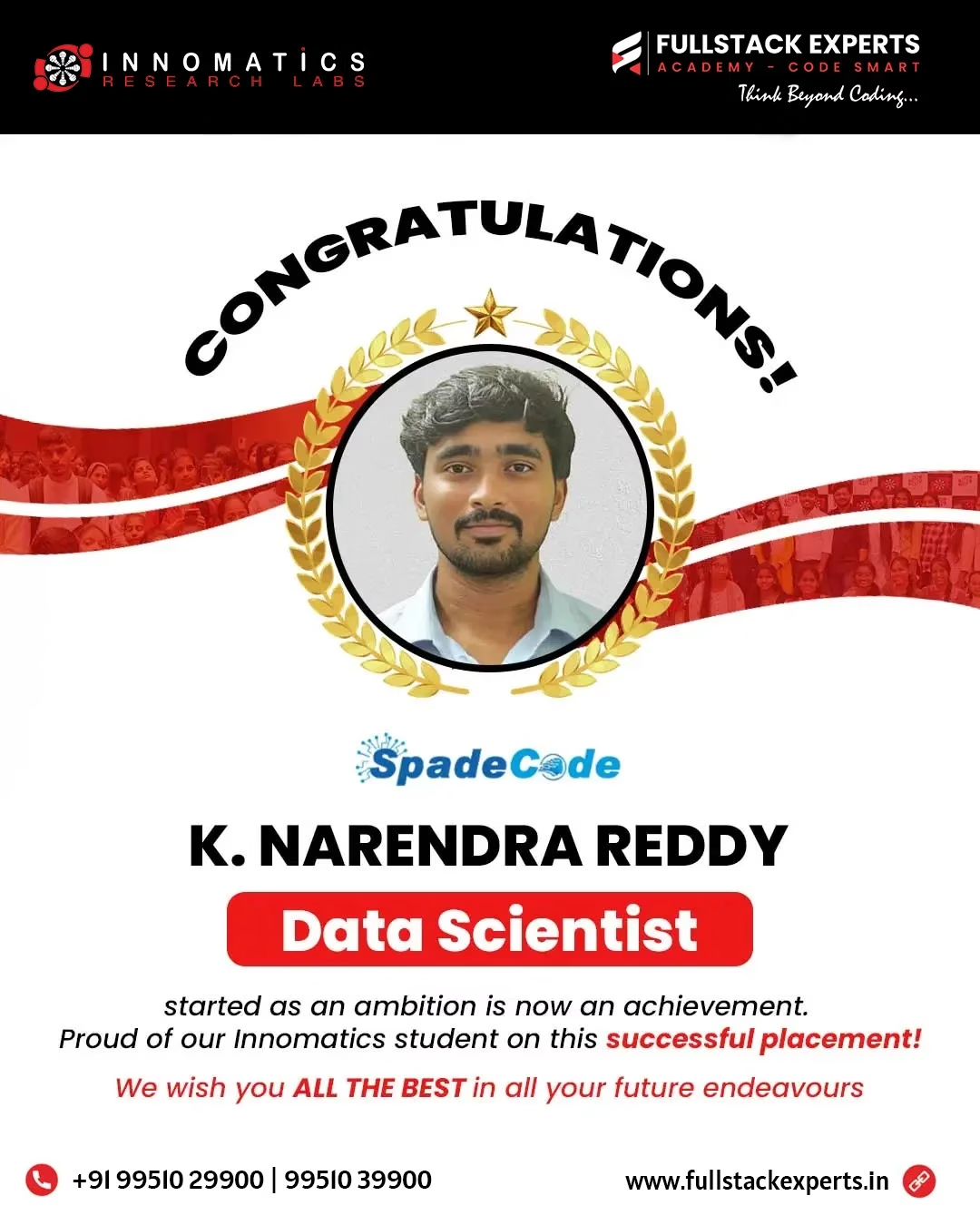
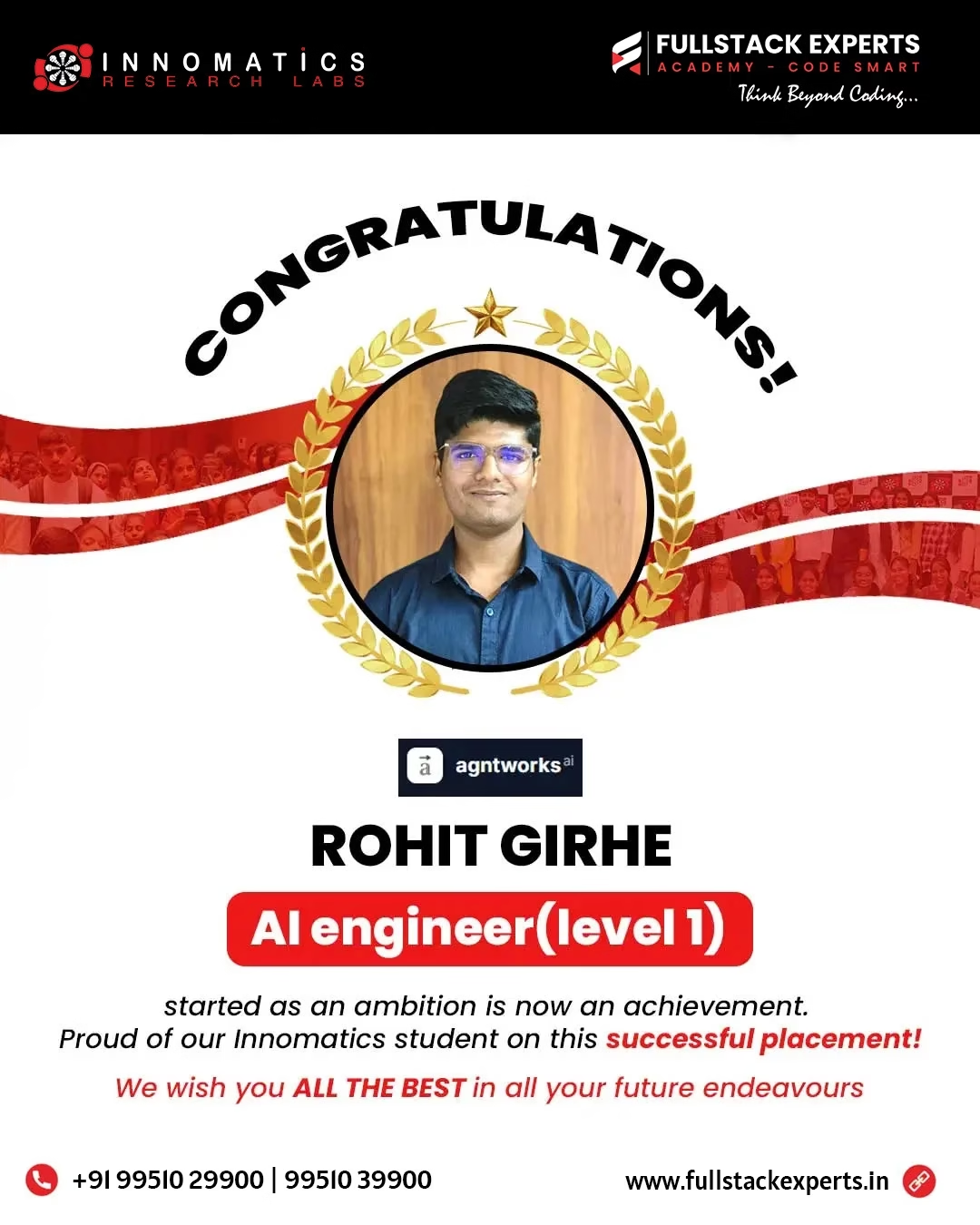
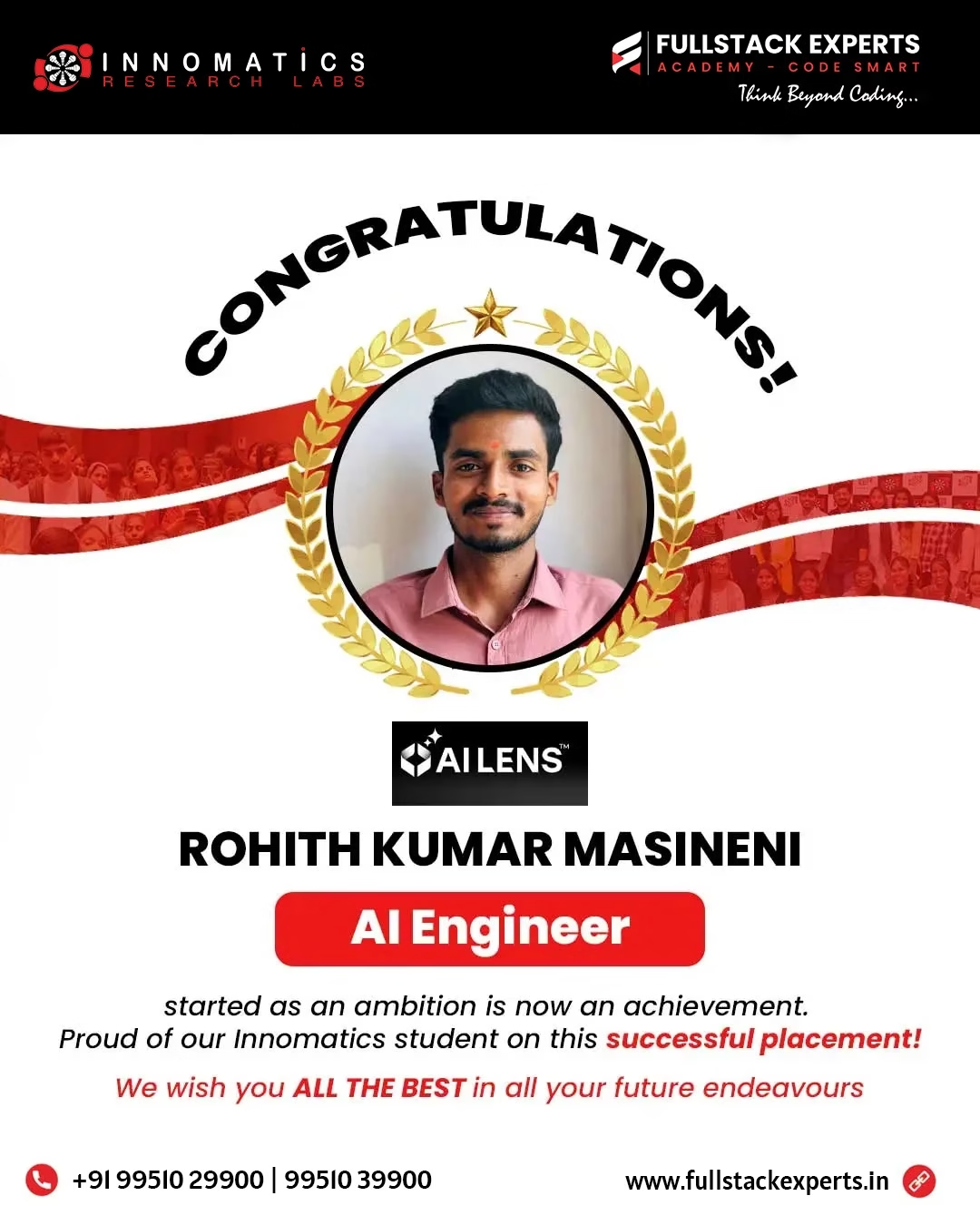
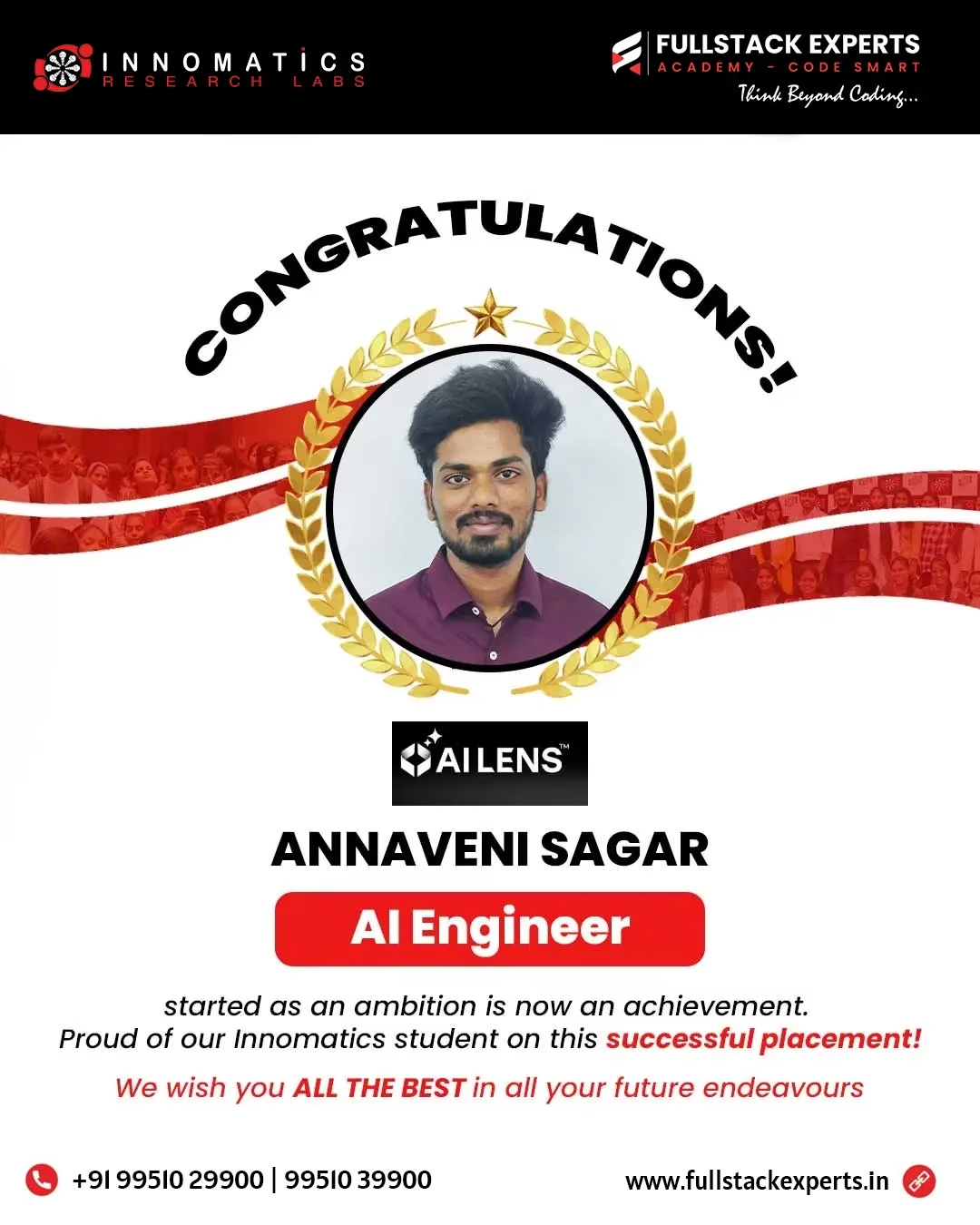
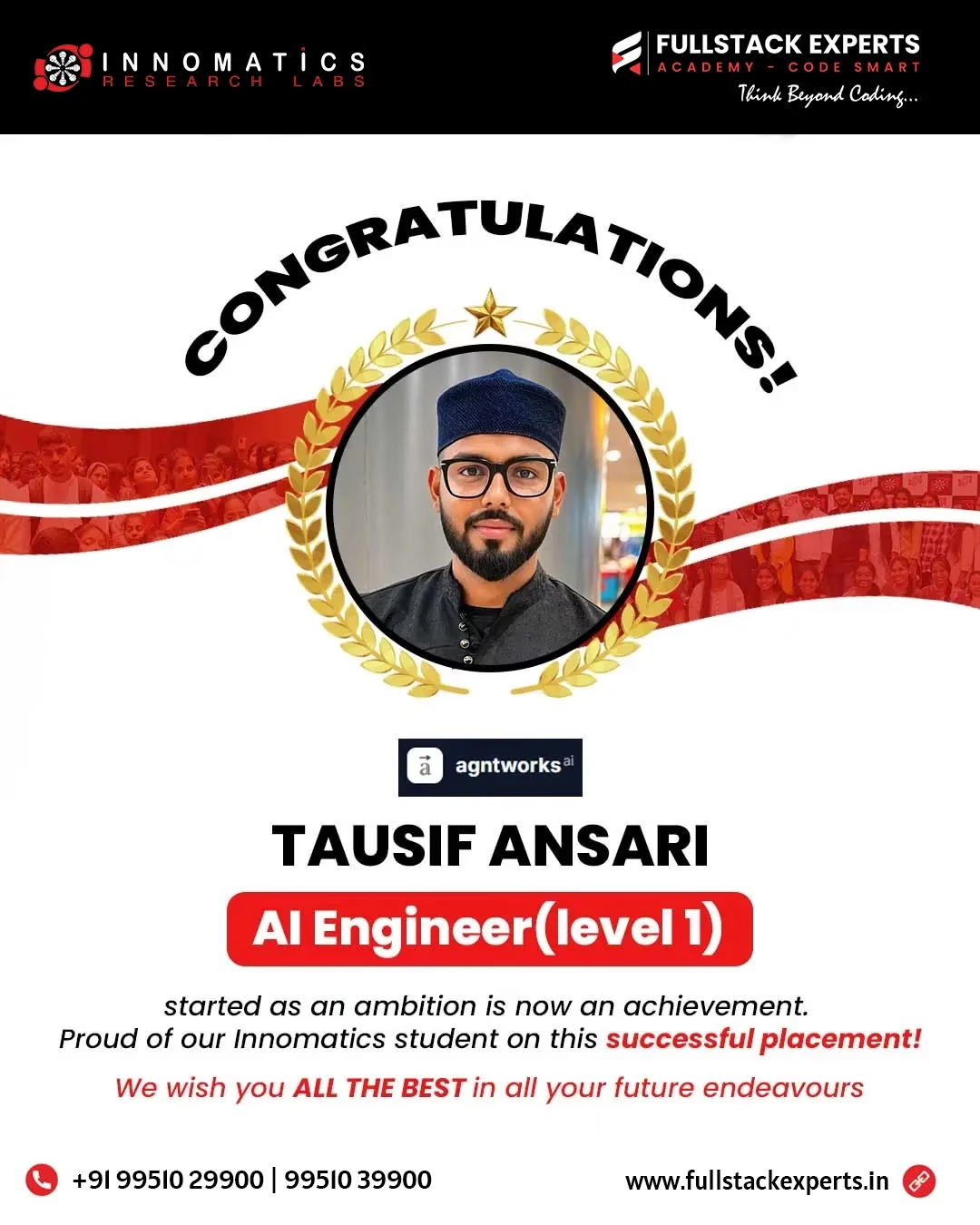
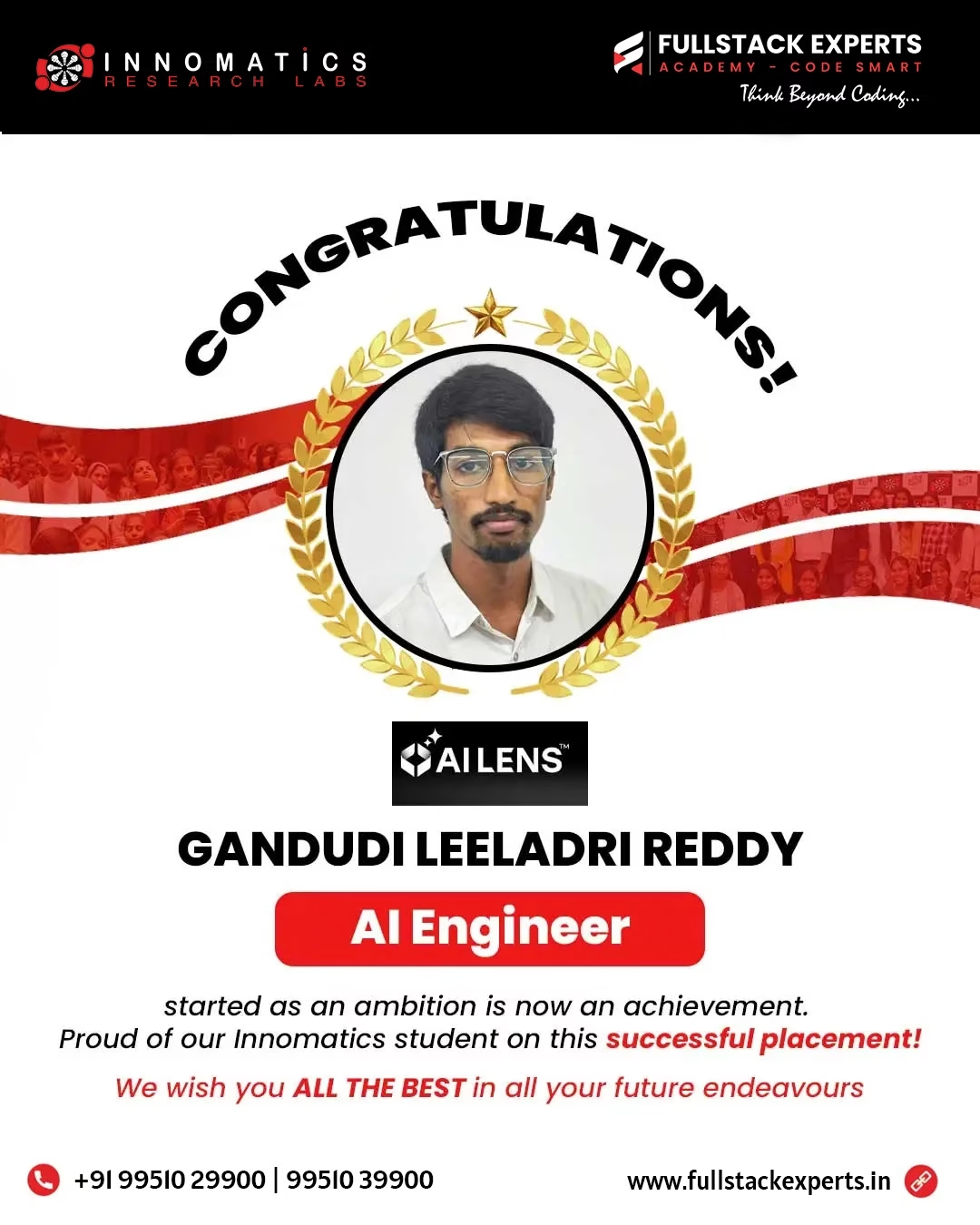
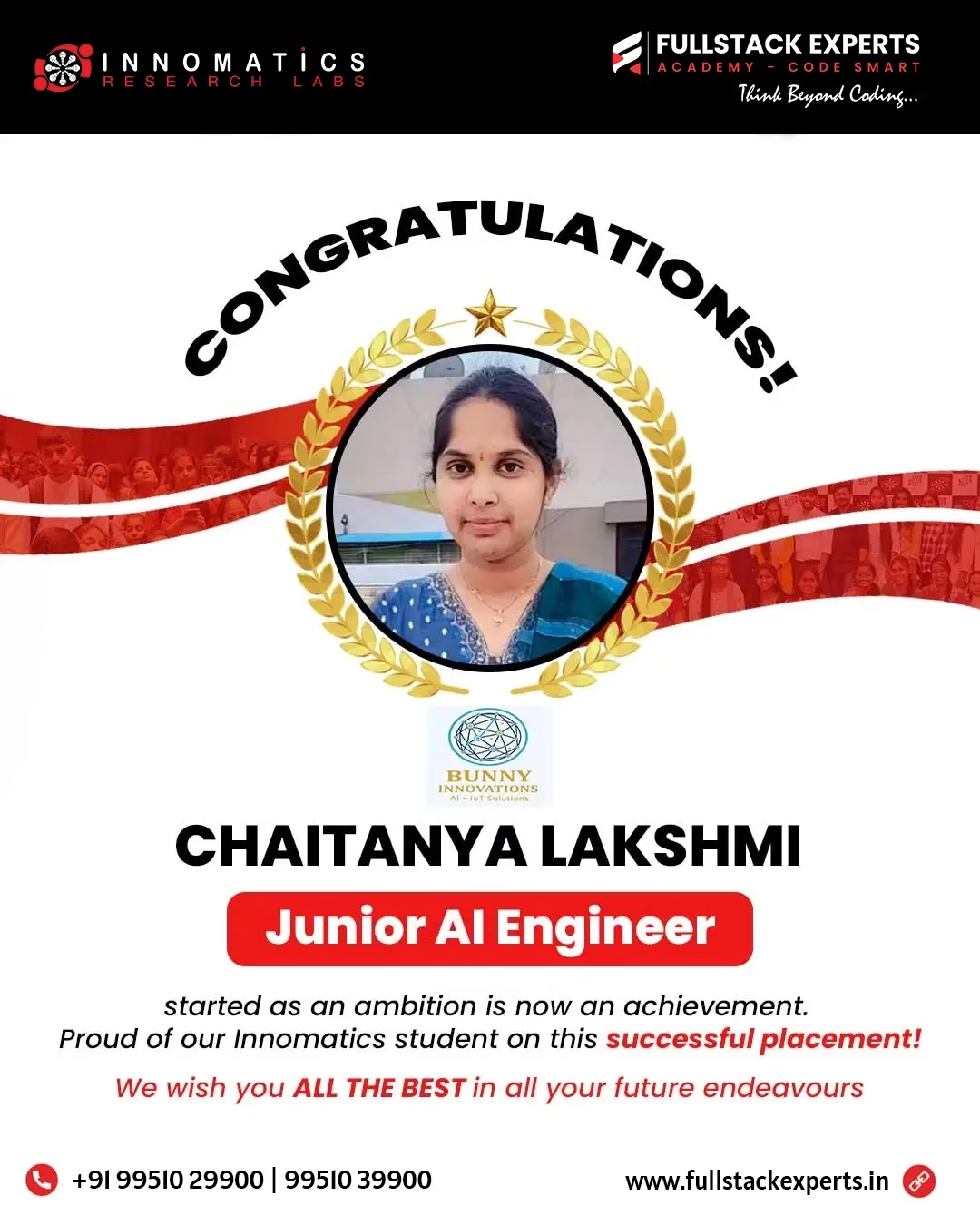
Success Stories from Our Student's

Students Excelling in Top Companies
General Queries & Answers

This program is designed for B.Tech, degree students, fresh graduates, and working professionals who want to build a career in Data Science, AI, and Machine Learning. No prior coding experience is required, as the course starts from the fundamentals and gradually advances to industry-level concepts.
The complete program duration is 5–6 months, including live mentor-led sessions, assignments, real-time projects, and capstone project training.

The curriculum covers in-demand technologies including Python, SQL, Machine Learning, Deep Learning, Power BI, Pandas, NumPy, TensorFlow, Generative AI, NLP, and Data Visualization tools. Students will also learn data analysis, predictive analytics, AI automation, and model deployment through practical training.

Yes, students will gain hands-on experience through real-time projects, case studies, and industry-based assignments. The program includes practical implementation of Machine Learning models, AI applications, dashboards, predictive analytics systems, and data visualization projects to build strong industry-ready skills.

After completing the course, students can apply for roles such as Data Scientist, Machine Learning Engineer, AI Engineer, Data Analyst, Business Intelligence Analyst, Generative AI Engineer, and Data Engineer. The program is designed to prepare students for high-demand AI and Data Science careers across multiple industries.

Yes, students will receive an industry-recognized course completion certificate after successfully completing the program. The academy also provides placement assistance including resume building, mock interviews, aptitude training, soft skills sessions, and interview preparation support to help students secure job opportunities.