No products in the cart.
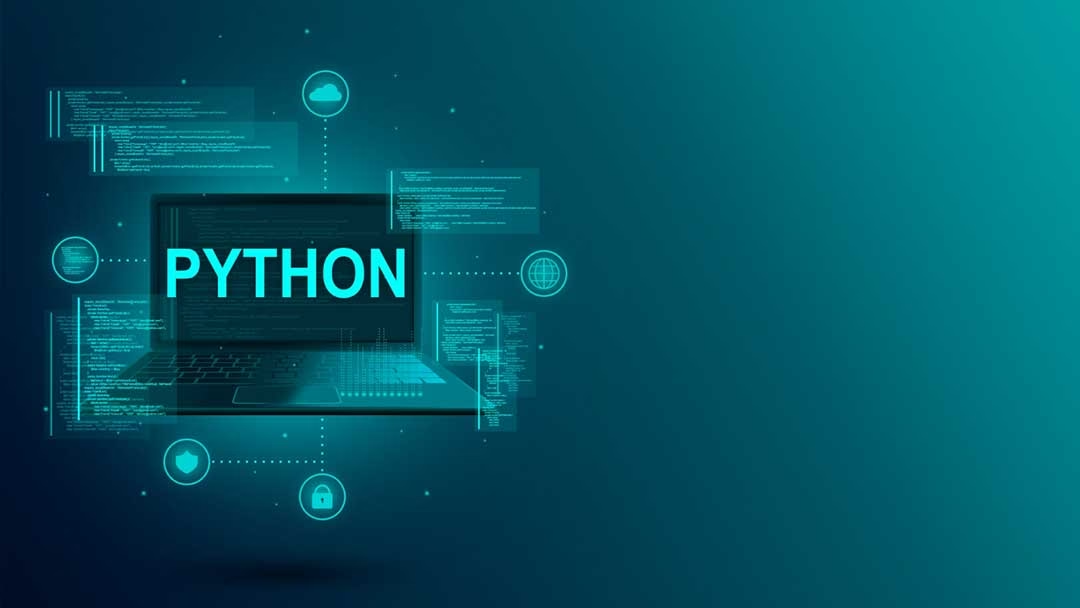
Breaking into the tech industry can feel overwhelming—especially if you’re a beginner or come from a non-IT background. That’s where Python Full Stack Development stands out. Known for its simplicity, power, and versatility, Python makes it easier for learners to transition into software development and build a successful tech career.
This blog explores how Python Full Stack Development offers a complete, step-by-step career path for both IT and Non-IT learners.
Python Full Stack Development involves building complete web applications—from designing user interfaces to managing databases and server logic.
A Python full stack developer works on:
Frontend: HTML, CSS, JavaScript, and modern UI frameworks
Backend: Python with Django
Database: SQL-based databases
Version Control & Tools: Git, GitHub, VS Code
This skill set enables developers to create scalable, secure, and real-world web applications.

Talha Duncan
Python is widely considered one of the easiest programming languages to learn, making it perfect for freshers and career switchers.
Simple and readable syntax
Less code, more functionality
Strong community support
High demand across industries
For non-IT learners, Python removes the fear of coding and builds confidence quickly.

Django is a powerful backend framework used to build secure and scalable web applications.
MVC architecture (Models, Views, Templates)
User authentication and authorization
API development
Database handling and migrations
Learning Django helps students understand how real backend systems work in the industry.
Python full stack development isn’t just about backend coding. Frontend skills are equally important.
HTML for structure
CSS for styling and responsiveness
JavaScript for interactivity
Modern UI practices for user experience
These skills help learners build visually appealing and user-friendly applications.
Projects play a crucial role in becoming job-ready. Instead of only learning theory, Python full stack learners work on live, practical projects.
User management systems
E-commerce platforms
Job portals
Dashboard and admin panels
Projects help learners understand application flow, debugging, and deployment—exactly what companies expect.
Python full stack developers are in demand across startups, enterprises, and product-based companies.
Python Full Stack Developer
Backend Developer (Django)
Web Application Developer
Software Engineer (Entry-Level)
Python skills are also transferable to data science, automation, and AI roles.
One of the biggest advantages of Python is its accessibility. Even learners from mechanical, civil, B.Com, B.Sc, or MBA backgrounds can transition into tech with proper guidance.
With structured training, mentorship, and project practice, non-IT learners can confidently compete with IT graduates.
At Full Stack Experts Academy, Python Full Stack Development is taught with a career-first approach:
Step-by-step beginner training
Live mentorship and doubt clearing
Real-world industry projects
GitHub portfolio building
Placement preparation and mock interviews
This ensures learners are not just certified—but job-ready.
Python Full Stack Development offers a clear, practical, and beginner-friendly path into the tech industry. Whether you are an IT graduate or someone switching careers, Python gives you the tools, confidence, and opportunities to succeed.
With the right training and hands-on experience, you can build real applications, crack interviews, and launch a successful career in software development.
Full Stack Experts Academy offers hands-on MERN Stack and Python Full Stack training to help learners become job-ready developers.

Full Stack Experts Academy offers MERN and Python Full Stack Development courses with hands-on training and industry-recognized certifications to launch successful developer careers.
#205, 2nd Floor, Fortune Signature, Near JNTU Metro Station, Kukatpally, Hyderabad, Telangana 500085
Full Stack Experts Academy empowers you with Full Stack Development, DSA, and Generative AI skills. Build real-world projects and launch your tech career.
Beside JNTU Metro Station,Plot 1, Vasanth Nagar Main Rd, Hydernagar, Kukatpally, Hyderabad, Telangana 500085
Copyright © 2026 Full Stack Experts Academy

1 Comment
This blog explains Python Full Stack Development in a very simple and beginner-friendly way. As a student learning Python Full Stack at Full Stack Experts Academy, I found the career path and technology flow really helpful.