Enquiry form
Edit Template
Enquiry form
Edit Template
Enquiry form
Edit Template

Python Full Stack Development

Home - Course Details

Python Fullstack With DSA+GEN AI

Become an AI-Powered Full Stack Python Developer
Full Stack + Advanced DSA

Master the future of software development with our Python Fullstack With DSA + GEN AI program a career-focused course designed to build industry-ready engineers. Learn full stack development, advanced DSA, and cutting-edge Generative AI while gaining hands-on experience in Python, Django / Flask, React, databases, APIs, and system design. With real-time projects and mock interviews, you’ll gain the skills and confidence to crack top company placements and become an AI-enabled developer.

Learning Partners of Full Stack Experts

Talk to our career expert

Python Fullstack with DSA + Gen AI

Python Fullstack with DSA + Gen AI

Advanced Python Full Stack Career Program

Python Fullstack with DSA + Gen AI is a career-oriented program that combines full stack development, advanced Data Structures & Algorithms, and Generative AI to build industry-ready developers. Gain hands-on experience in Python, Django / Flask, React, databases, APIs, and AI-powered tools while working on real-time projects and coding challenges to confidently crack top company placements.

What You’ll Learn

Why Learn Python Fullstack With Us?

Course Details:

Course Price:

Initial Fee: ₹30,000 Pay After Placement: ₹30,000

Course Price:

------------------

Instructor

-----------------

Course Duration

5 Months

Modules

10

Students Placed

100+

Language:

HTML, CSS, JS, Bootstrap, React, Python, Django, Flask, Git/GitHub

Certifications

Digital, Physical

Timings

Mon–Wed: 09:00 AM – 08:00 PM
Thu–Sat: 08:00 AM – 05:00 PM
Sun: Closed

Python Fullstack with DSA + Gen AI
Edit Template

Tools you will Master

Curriculum Highlights

Programming & Development Basics: Programming intro, SDLC overview, and workflow basics.


VS Code Setup & Interface: Installation, extensions, themes, explorer, and terminal configuration.


Project & File Management: Folder structure, file creation, and professional workspace setup.


Command Line & Git Fundamentals: Terminal commands, navigation, Git basics, and workflow.


Git Commands & GitHub: Init, add, commit, push, pull, clone, branching, and merging.


First Project Execution: Run code, environment setup, and basic testing.

HTML Basics: Inline elements, Block elements, Element attributes


HTML Forms:HTML forms and form elements, Types of inputs, Buttons


HTML Media & Links: Anchor tags, Images, Video


HTML Meta & Utility Tags: Meta tags, Miscellaneous tags (code, table, span, etc.)


CSS Fundamentals: Cascading, CSS selectors


CSS Selectors: Element selectors, Pseudo selectors, Attribute selectors


CSS Colors & Backgrounds: CSS colors, Color picker, Gradients, Background properties


CSS Box Model: Box model, Padding, Margin, Border


CSS Layout & Alignment: CSS alignment, Flexbox, Grid, Positioning


Advanced CSS: CSS transformations, iFrames, Animations, Webkit & keyframes.


Bootstrap (Responsive UI Development)


Bootstrap Basics: Bootstrap introduction, paragraphs, alignments


Typography & Content: Quotes, Lists, Code blocks, Keyboard elements


Contextual Styling: Contextual classes, Labels


Buttons & Forms: Buttons, Links, Submit buttons, Forms


Data Display: Tables, List groups, List group items


Navigation Components: Pagination


UI Feedback Components: Alerts, Panels, Wells, Progress bar


Grid System: Bootstrap grid system and responsive layouts


JavaScript Programming


JavaScript Fundamentals (ES6): Variables, data types, operators, control flow


Functions & OOP: JavaScript functions, Arrow functions, Classes, OOP concepts


DOM Manipulation: DOM access, DOM manipulation


Events: DOM events and event handling


Higher Order Functions: forEach, map, filter, reduce


JavaScript Best Practices: Tips and tricks for clean and efficient JS code


AJAX & API Integration


Client–Server Architecture: Introduction to client-server model


Data Formats: XML and JSON APIs


Fundamentals: Introduction to APIs


API Testing: Testing APIs using Postman


Asynchronous Communication: Async programming concepts


Frontend API Integration: Consuming APIs in frontend applications


React.js Development


React Basics: Creating React app, Folder structure


Components: Understanding components, Functional components, Class components


JSX & Events: JSX syntax, Event handling


Props & State: Working with props, State management


Forms & Inputs: Handling user inputs, Adding forms


Lifecycle & Hooks: Component lifecycle, React Hooks (useState, useEffect)


HTTP Communication: Making HTTP requests using Axios


Routing: Routing in React


Context & State Management: React Context API


Advanced State Management: Redux, Redux middleware (Thunk, Logger)


Third-party Integrations: Using third-party APIs


Front End Development Project


Frontend Capstone Project: End-to-end frontend application using HTML, CSS, JavaScript, React


API Integration Project: Integrating third-party APIs


State Management Implementation: Redux-based state management


Deployment Readiness: Project structure, optimization, best practices


Python Programming Foundations


Python Environment Setup: Installing Python, Setting up VS Code / PyCharm, Virtual environments


Python Program Structure: Python execution model, scripts vs modules


Control Flow Statements: Conditional statements (if, elif, else)


Data Structures – Basics: Lists, Tuples, Sets, Dictionaries


Loops: for loop, while loop
Functions: Function definition, parameters, return values


OOP Fundamentals: Introduction to Classes and Objects in Python


Python Intermediate Programming


OOP Principles: Inheritance, Polymorphism, Encapsulation, Abstraction


Advanced Data Structures: List comprehensions, Dictionary comprehensions


Iterators & Generators: Iteration protocol, generators


Lambda Functions: Functional programming with lambda


Built-in Functional Tools: map, filter, reduce


Advanced Python Concepts


Exception Handling Basics: Introduction to exceptions


Exception Types: Built-in exceptions


Exception Hierarchy: Exception hierarchy in Python


Errors vs Exceptions: Differences between runtime errors and exceptions


Handling Exceptions: try, except, else, finally blocks


Custom Exceptions: Creating and raising user-defined exceptions


File Handling


File Handling Basics: Introduction to file handling


File Operations: Reading and writing files


File Modes: Read, Write, Append


Context Managers: Using with statement


Practical Use Cases: File-based data processing tasks


Databases (MySQL / PostgreSQL)


Database Fundamentals: Introduction to databases


Relational Databases: RDBMS concepts


Database Creation: Creating databases and tables


CRUD Operations: Insert, Select, Update, Delete


Querying Data: WHERE clause, ORDER BY, GROUP BY


Joins: Inner join, Left join, Right join


Advanced Queries: Subqueries and complex joins


Database Connectivity (Python ORM & DB APIs)


APIs Basics: Introduction to APIs


Python DB Connectivity: Using DB-API (psycopg2 / mysql-connector


ORM Introduction: ORM concepts


SQLAlchemy Basics: Models, sessions, queries


Database Operations: CRUD using ORM


Best Practices: Secure and efficient database interaction


Introduction to the Web


Web Fundamentals: Hypertext Transfer Protocol (HTTP)


Web Applications: What are web applications


Client–Server Architecture: Request–response lifecycle


MVC / MVT Architecture: Introduction to Django’s MVT architecture


MVT Components: Model, View, Template responsibilities


Backend Design Patterns


Design Patterns Overview: Introduction and utility of design patterns


Core Backend Patterns: MVC/MVT, Active Record, IOC


Structural Patterns: Singleton, Facade, Adapter


Django Architecture: How Django implements MVT


Project Structure: Understanding Django project & app structure


Django Fundamentals


Django Introduction: What is Django and why it is used


Django Project Setup: Creating a Django project and apps


Django Settings: Understanding settings.py


URL Routing: URL dispatcher and routing


Views: Function-based and class-based views


Templates: Rendering templates and dynamic dat


Django Framework (Core Backend Development)


Django Application Flow: Request -> URL -> View ->Template


Dependency Injection (Conceptual): Loose coupling in Django


Middleware: Introduction to Django middleware


Forms: Django forms and model forms


REST Basics: Building basic APIs using Django views


Object Relational Mapping (Django ORM)


ORM Fundamentals: Introduction to Django ORM


Model Design: Creating models and fields


QuerySets: Filtering, ordering, aggregations


Relationships: One-to-One, One-to-Many, Many-to-Many


Migrations: Creating and applying migrations


User Authentication & Authorization


Authentication Basics: Django authentication system


User Model: Default user model and customization


Login & Registration: Implementing login and register functionality


Authorization: Permissions and access control


Sessions: Session and cookie management


Project – Blogging Application using Spring Boot


Application Design: Designing UML for the application


Authentication Implementation: Login and registration workflows


Blog Management: Create, update, delete blog posts


Entity Relationships: User and post mapping


Frontend Design: Designing the frontend UI


API Integration: Integrating frontend with backend APIs

Arrays


Array Fundamentals: Introduction to arrays, memory layout


Traversal & Operations: Accessing, inserting, deleting elements


Problem-Solving Patterns: Prefix sum, frequency counting


Optimization Techniques: Time & space complexity analysis


Interview Problems: Subarrays, maximum/minimum problems


Bit Manipulation


Bitwise Basics: AND, OR, XOR, NOT


Bit Operations: Left shift, right shift


Problem Patterns: Checking odd/even, counting set bits


Optimization Use Cases: Space and performance optimization


Interview Problems: Single number, power of two


Searching & Sorting


Linear & Binary Search: Search techniques and applications


Sorting Algorithms: Bubble, Selection, Insertion


Efficient Sorting: Merge sort, Quick sort


Comparison Analysis: Stability, in-place vs extra space


Interview Problems: Search space optimization


Recursion & Backtracking


Recursion Basics: Function calls and call stack


Recursive Patterns: Divide and conquer


Backtracking Concepts: Decision trees


Classic Problems: Subsets, permutations, combinations


Optimization: Avoiding redundant calls


Hashing


Hashing Fundamentals: Hash functions and hash tables


Data Structures: HashMap / Dictionary


Collision Handling: Chaining, probing


Problem-Solving Patterns: Frequency maps, lookup optimization


Interview Problems: Two-sum, anagrams


Stacks


Stack Fundamentals: LIFO principle


Stack Operations: Push, pop, peek


Implementation: Stack using arrays and linked lists


Problem Patterns: Expression evaluation, monotonic stack


Interview Problems: Valid parentheses, next greater element


Queues


Queue Fundamentals: FIFO principle


Queue Variants: Circular queue, deque


Implementation: Queue using arrays and linked lists


Problem Patterns: Sliding window


Interview Problems: Queue-based simulations


Linked Lists


Linked List Basics: Singly and doubly linked lists


Operations: Insert, delete, reverse


Pointer Techniques: Slow & fast pointer


Problem Patterns: Cycle detection


Interview Problems: Merge lists, reverse in groups


Trees

Tree Fundamentals: Tree terminology


Binary Trees: Traversals (Inorder, Preorder, Postorder)


Binary Search Trees: BST properties and operations


Tree Algorithms: Height, diameter, lowest common ancestor


Interview Problems: Path-based problems


Heaps


Heap Fundamentals: Min heap and max heap


Heap Operations: Insert, delete, heapify


Priority Queue: Heap-based priority queues


Problem Patterns: Top-K problems


Interview Problems: Kth largest element


Greedy Programming


Greedy Strategy: Making locally optimal choices


Problem Identification: When greedy works


Classic Problems: Activity selection, interval scheduling


Proof Techniques: Greedy correctness


Interview Problems: Job sequencing


Dynamic Programming


DP Fundamentals: Overlapping subproblems


DP Techniques: Memoization, tabulation


1D DP: Fibonacci, climbing stairs


2D DP: Knapsack, LCS


Optimization: Space optimization techniques


Graphs


Graph Fundamentals: Graph representations


Traversals: BFS, DFS


Directed & Undirected Graphs: Cycles, connectivity


Algorithms: Topological sort


Interview Problems: Shortest path basics


Introduction to Generative AI: AI basics, GenAI overview, real-world use cases


AI Tools in Development: GitHub Copilot in VS Code, AI coding assistants, productivity workflows


Prompt Engineering: Prompt structure, instruction tuning, context design, output control


Code Generation & Optimization: Code creation, refactoring, documentation generation, test case creation


AI-Based Debugging & Problem Solving: Error explanation, bug fixing, performance suggestions, logic improvement


Responsible & Practical AI Usage: Limitations, accuracy checking, ethical use, project integration


Quantitative Aptitude Basics:

  • Number system
  • Percentages
  • Ratio & proportion
  • Averages


Arithmetic Problem Solving:

  • Profit & loss
  • Time & work
  • Time–speed–distance
  • Simple & compound interest


Logical Reasoning:

  • Series
  • Patterns
  • Coding–decoding
  • Blood relations
  • Directions


Analytical Thinking:

  • Puzzles
  • Seating arrangements
  • Syllogisms
  • Data sufficiency


Data Interpretation:

  • Tables
  • Bar graphs
  • Pie charts
  • Caselets


Placement Test Strategies:

  • Shortcuts
  • Time management
  • Accuracy improvement
  • Mock tests


Self-Awareness & Personal Branding:
Understand your strengths, career goals, and professional mindset while building a
strong foundation for professional growth.


Self-Introduction Mastery:
Develop impactful elevator pitches, structured introductions, & confident personal
storytelling.


Communication & Professional Etiquette:
Improve verbal and non-verbal communication, avoid miscommunication, and
practice proper email and telephonic etiquette.


Public Speaking, Presentation & JAM:
Build stage confidence, design engaging presentations, practice JAM sessions, and
connect effectively with audiences.


Group Discussion Excellence:
Learn GD strategies, idea structuring, teamwork skills, and evaluation techniques used
in placements.


Interview Skills & FAQs:
Prepare for technical and HR interviews, handle common questions, and deliver
confident behavioral responses.


LinkedIn Profile & Resume Building:
Create a strong LinkedIn presence, craft ATS-friendly resumes, and position your
profile for recruiter visibility.


Mock Interviews & Time Management:
Experience technical, HR, and telephonic mock interviews, analyse feedback, and
develop strong time-management habits.


Brochure Python Fullstack with DSA + Gen AI
Edit Template

Real World, Industry Focused Projects

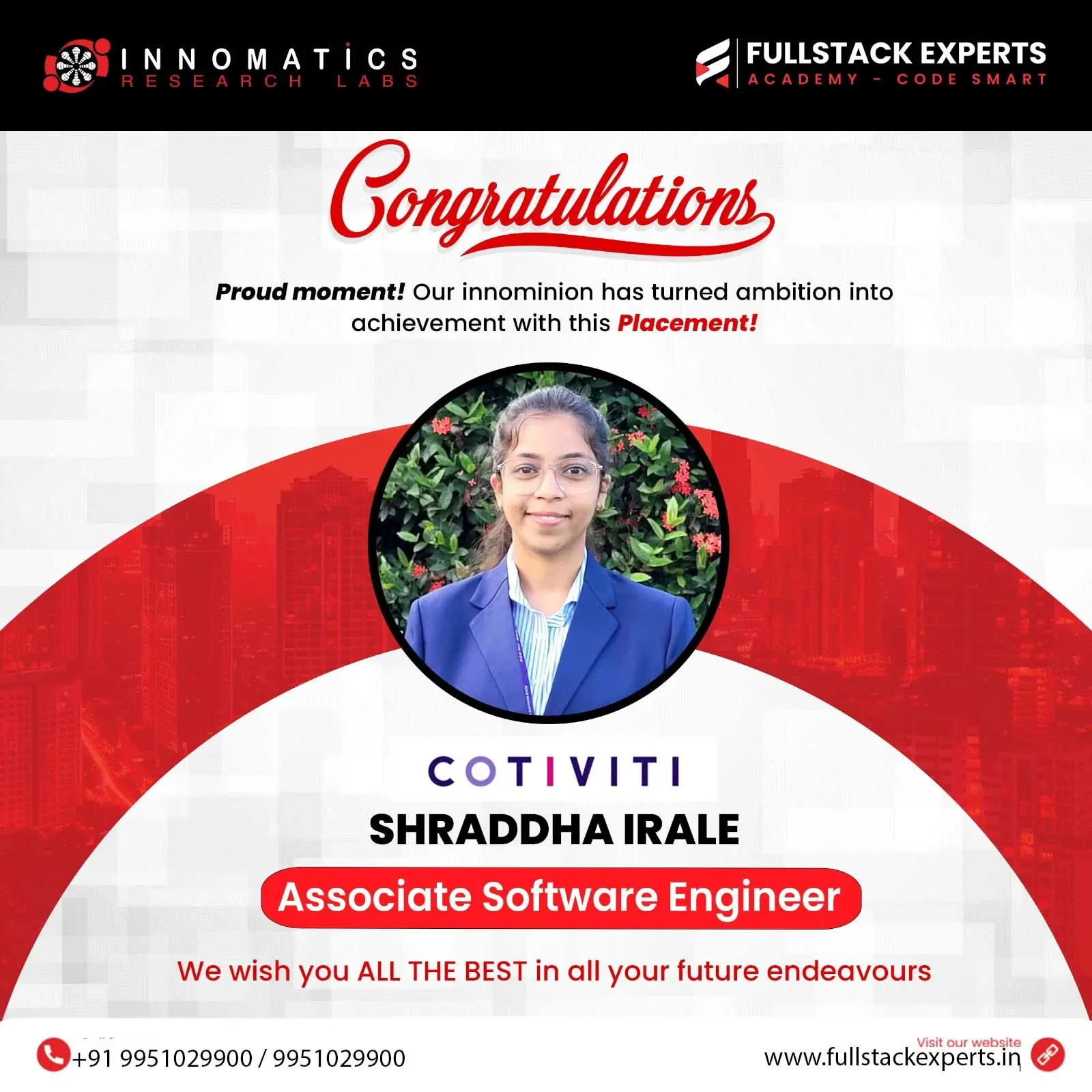
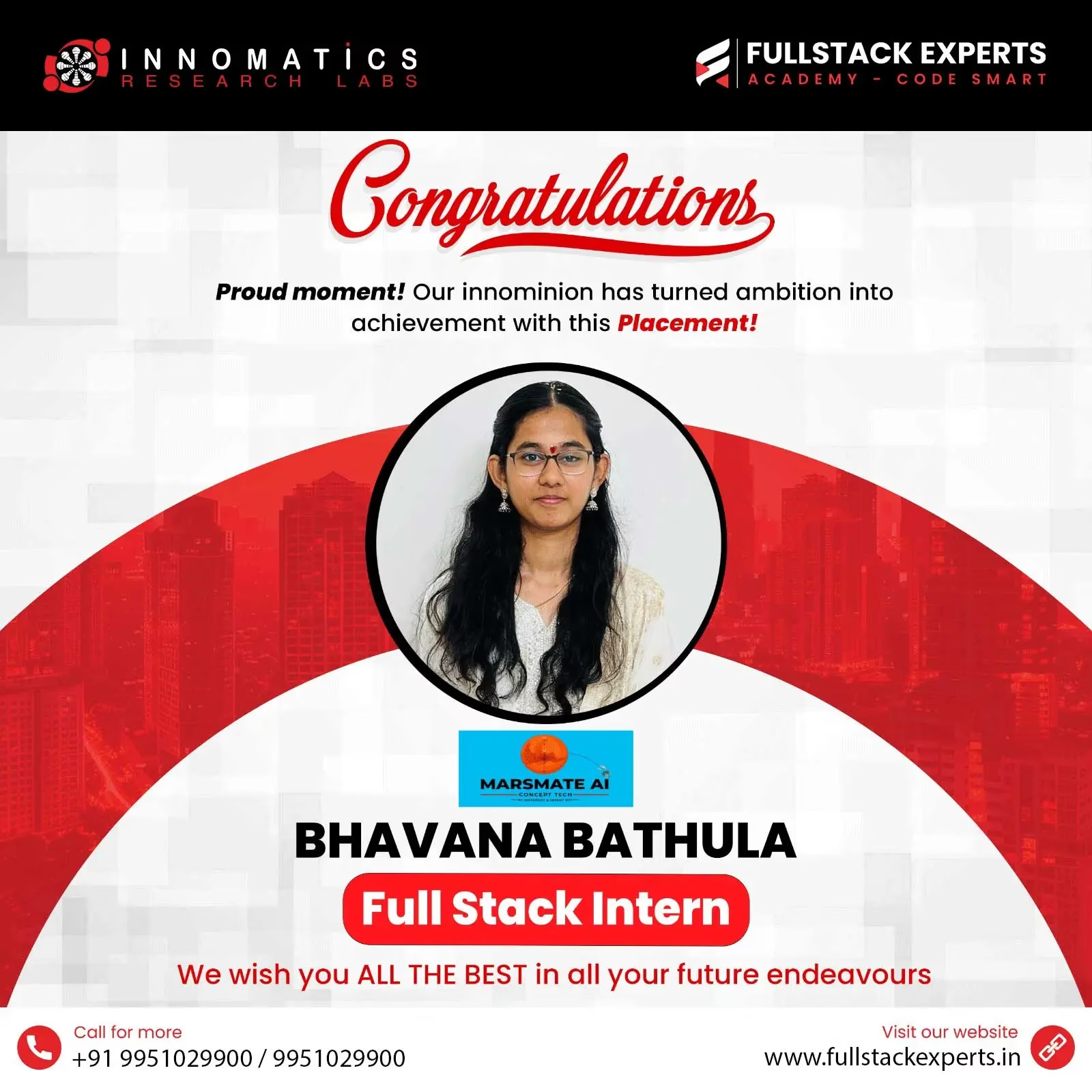
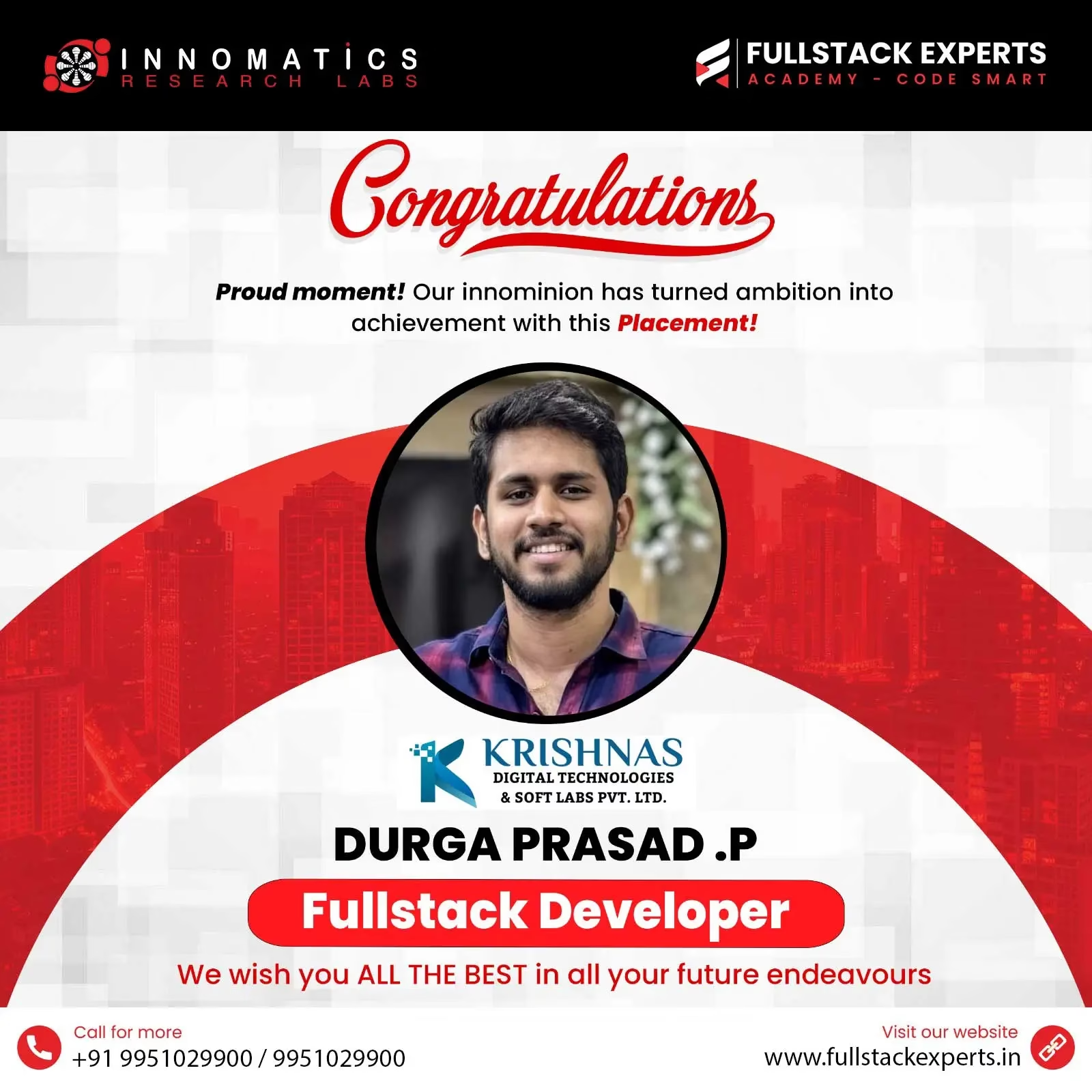
Success Stories from Our Student's

Students Excelling in Top Companies

General Queries & Answers

This program is designed for B.Tech and degree students (any stream), recent graduates, and working professionals who want to start or transition into a Full Stack Development career.


It is suitable for:


  • Beginners with no prior coding experience

  • Learners with basic programming knowledge seeking structured training

  • Professionals aiming to upgrade with Full Stack, DSA, and AI skills

The curriculum starts from Python fundamentals and progresses to advanced development concepts.

The curriculum provides comprehensive, industry-oriented training across multiple domains:


Programming:
Python (Core to Advanced), OOP, Iterators, Generators, Exception Handling


Frontend Development:
HTML5, CSS3, Bootstrap, JavaScript (ES6), React.js


Backend Development:
Django, Flask, MVT Architecture, Authentication, Admin Panel


Databases:
MySQL, PostgreSQL, MongoDB, ORM, CRUD Operations


APIs & Tools:
REST API Development, JSON, Client–Server Architecture, Postman
Git and GitHub for Version Control


Data Structures & Algorithms (DSA):
Arrays, Linked Lists, Trees, Graphs, Dynamic Programming, and coding interview preparation


Generative AI Integration:
AI coding assistants, prompt engineering, debugging, optimization techniques, and responsible AI practices

The program follows a project-based learning approach with strong practical exposure, including:


  • Full Stack web applications using Django/Flask and React

  • REST API development and integration

  • Database-driven enterprise applications

  • Capstone projects combining Full Stack, DSA, and AI

Students also receive:


  • Coding challenges and assignments

  • Interview preparation modules

  • Mock interviews and technical assessments

This ensures learners build a strong, job-ready portfolio.

The program consists of 10 comprehensive modules delivered through:


  • Live mentor-led interactive sessions

  • Hands-on coding practice

  • Real-time projects

  • Assignments and coding challenges

Students also receive full LMS access, including:


  • Session recordings

  • Study materials and notes

  • Practice resources

  • Project guidance

This structured format ensures both conceptual clarity and practical mastery.

Yes. Full Stack Experts Academy provides structured placement assistance, including:


  • Resume building and LinkedIn profile optimization

  • Coding interview preparation

  • Mock interviews and technical evaluations

  • Referral support and job readiness training

The integrated Full Stack + DSA + Generative AI curriculum, combined with live mentorship and continuous practice, makes this program industry-aligned and career-focused.

Full Stack Experts Academy offers MERN and Python Full Stack Development courses with hands-on training and industry-recognized certifications to launch successful developer careers.

Quick Links

Terms of Use

Contact Details:

#205, 2nd Floor, Fortune Signature, Near JNTU Metro Station, Kukatpally, Hyderabad, Telangana 500085

Full Stack Experts Academy empowers you with Full Stack Development, DSA, and Generative AI skills. Build real-world projects and launch your tech career.

Contact Details:

Beside JNTU Metro Station,Plot 1, Vasanth Nagar Main Rd, Hydernagar, Kukatpally, Hyderabad, Telangana 500085

Start Learning Today

popup Enquiry form