Enquiry form
Edit Template
Enquiry form
Edit Template
Enquiry form
Edit Template

Python Full Stack Development

Home - Course Details

Python Fullstack With DSA+GEN AI

Become an AI-Powered Python Full Stack Course

Build your future tech career with Full Stack Experts Academy’s TIH at IIT Patna NASSCOM FutureSkills Prime Certified Python Full Stack Developer Course in Hyderabad. Master Python, Django/Flask, React, Databases, APIs, Advanced DSA, System Design & Generative AI through hands-on real-time projects and mock interviews. Gain industry-ready skills and become job-ready for software development opportunities in Hyderabad’s competitive tech industry.

Learning Partners of Full Stack Experts

iit-patna-full-stac

Talk to our career expert

Python Fullstack with DSA + Gen AI

Python Full Stack Course with DSA + Gen AI

Advanced Python Full Stack Developer Course for Career Success

The Python Full Stack Developer Course at Full Stack Experts Academy is a career-focused program designed to build job-ready skills in Python, Django, Flask, React, databases, APIs, Data Structures and Algorithms (DSA), and Generative AI. Through hands-on coding exercises, real-world projects, and practical development experience, learners gain the technical expertise needed to build modern, scalable web applications and AI-powered solutions. The program focuses on industry-relevant skills, problem-solving, and practical implementation to help participants confidently prepare for software development careers and job opportunities in the IT industry.

What You’ll Learn

Why Learn Python Full Stack With Us?

Course Details:

Course Price:

Initial Fee: ₹30,000 Pay After Placement: ₹30,000

Course Price:

------------------

Instructor

-----------------

Course Duration

5 Months

Modules

10

Students Placed

100+

Language:

HTML, CSS, JS, Bootstrap, React, Python, Django, Flask, Git/GitHub

Certifications

Digital, Physical

Timings

Mon–Wed: 09:00 AM – 08:00 PM
Thu–Sat: 08:00 AM – 05:00 PM
Sun: Closed

Python Fullstack with DSA + Gen AI
Edit Template

Master the Tools Elevate Your Skills

Curriculum Highlights

Programming & Development Basics: Programming intro, SDLC overview, and workflow basics.


VS Code Setup & Interface: Installation, extensions, themes, explorer, and terminal configuration.


Project & File Management: Folder structure, file creation, and professional workspace setup.


Command Line & Git Fundamentals: Terminal commands, navigation, Git basics, and workflow.


Git Commands & GitHub: Init, add, commit, push, pull, clone, branching, and merging.


First Project Execution: Run code, environment setup, and basic testing.

HTML Basics: Inline elements, Block elements, Element attributes


HTML Forms:HTML forms and form elements, Types of inputs, Buttons


HTML Media & Links: Anchor tags, Images, Video


HTML Meta & Utility Tags: Meta tags, Miscellaneous tags (code, table, span, etc.)


CSS Fundamentals: Cascading, CSS selectors


CSS Selectors: Element selectors, Pseudo selectors, Attribute selectors


CSS Colors & Backgrounds: CSS colors, Color picker, Gradients, Background properties


CSS Box Model: Box model, Padding, Margin, Border


CSS Layout & Alignment: CSS alignment, Flexbox, Grid, Positioning


Advanced CSS: CSS transformations, iFrames, Animations, Webkit & keyframes.


Bootstrap (Responsive UI Development)


Bootstrap Basics: Bootstrap introduction, paragraphs, alignments


Typography & Content: Quotes, Lists, Code blocks, Keyboard elements


Contextual Styling: Contextual classes, Labels


Buttons & Forms: Buttons, Links, Submit buttons, Forms


Data Display: Tables, List groups, List group items


Navigation Components: Pagination


UI Feedback Components: Alerts, Panels, Wells, Progress bar


Grid System: Bootstrap grid system and responsive layouts


JavaScript Programming


JavaScript Fundamentals (ES6): Variables, data types, operators, control flow


Functions & OOP: JavaScript functions, Arrow functions, Classes, OOP concepts


DOM Manipulation: DOM access, DOM manipulation


Events: DOM events and event handling


Higher Order Functions: forEach, map, filter, reduce


JavaScript Best Practices: Tips and tricks for clean and efficient JS code


AJAX & API Integration


Client–Server Architecture: Introduction to client-server model


Data Formats: XML and JSON APIs


Fundamentals: Introduction to APIs


API Testing: Testing APIs using Postman


Asynchronous Communication: Async programming concepts


Frontend API Integration: Consuming APIs in frontend applications


React.js Development


React Basics: Creating React app, Folder structure


Components: Understanding components, Functional components, Class components


JSX & Events: JSX syntax, Event handling


Props & State: Working with props, State management


Forms & Inputs: Handling user inputs, Adding forms


Lifecycle & Hooks: Component lifecycle, React Hooks (useState, useEffect)


HTTP Communication: Making HTTP requests using Axios


Routing: Routing in React


Context & State Management: React Context API


Advanced State Management: Redux, Redux middleware (Thunk, Logger)


Third-party Integrations: Using third-party APIs


Front End Development Project


Frontend Capstone Project: End-to-end frontend application using HTML, CSS, JavaScript, React


API Integration Project: Integrating third-party APIs


State Management Implementation: Redux-based state management


Deployment Readiness: Project structure, optimization, best practices


Python Programming Foundations


Python Environment Setup: Installing Python, Setting up VS Code / PyCharm, Virtual environments


Python Program Structure: Python execution model, scripts vs modules


Control Flow Statements: Conditional statements (if, elif, else)


Data Structures – Basics: Lists, Tuples, Sets, Dictionaries


Loops: for loop, while loop
Functions: Function definition, parameters, return values


OOP Fundamentals: Introduction to Classes and Objects in Python


Python Intermediate Programming


OOP Principles: Inheritance, Polymorphism, Encapsulation, Abstraction


Advanced Data Structures: List comprehensions, Dictionary comprehensions


Iterators & Generators: Iteration protocol, generators


Lambda Functions: Functional programming with lambda


Built-in Functional Tools: map, filter, reduce


Advanced Python Concepts


Exception Handling Basics: Introduction to exceptions


Exception Types: Built-in exceptions


Exception Hierarchy: Exception hierarchy in Python


Errors vs Exceptions: Differences between runtime errors and exceptions


Handling Exceptions: try, except, else, finally blocks


Custom Exceptions: Creating and raising user-defined exceptions


File Handling


File Handling Basics: Introduction to file handling


File Operations: Reading and writing files


File Modes: Read, Write, Append


Context Managers: Using with statement


Practical Use Cases: File-based data processing tasks


Databases (MySQL / PostgreSQL)


Database Fundamentals: Introduction to databases


Relational Databases: RDBMS concepts


Database Creation: Creating databases and tables


CRUD Operations: Insert, Select, Update, Delete


Querying Data: WHERE clause, ORDER BY, GROUP BY


Joins: Inner join, Left join, Right join


Advanced Queries: Subqueries and complex joins


Database Connectivity (Python ORM & DB APIs)


APIs Basics: Introduction to APIs


Python DB Connectivity: Using DB-API (psycopg2 / mysql-connector


ORM Introduction: ORM concepts


SQLAlchemy Basics: Models, sessions, queries


Database Operations: CRUD using ORM


Best Practices: Secure and efficient database interaction


Introduction to the Web


Web Fundamentals: Hypertext Transfer Protocol (HTTP)


Web Applications: What are web applications


Client–Server Architecture: Request–response lifecycle


MVC / MVT Architecture: Introduction to Django’s MVT architecture


MVT Components: Model, View, Template responsibilities


Backend Design Patterns


Design Patterns Overview: Introduction and utility of design patterns


Core Backend Patterns: MVC/MVT, Active Record, IOC


Structural Patterns: Singleton, Facade, Adapter


Django Architecture: How Django implements MVT


Project Structure: Understanding Django project & app structure


Django Fundamentals


Django Introduction: What is Django and why it is used


Django Project Setup: Creating a Django project and apps


Django Settings: Understanding settings.py


URL Routing: URL dispatcher and routing


Views: Function-based and class-based views


Templates: Rendering templates and dynamic dat


Django Framework (Core Backend Development)


Django Application Flow: Request -> URL -> View ->Template


Dependency Injection (Conceptual): Loose coupling in Django


Middleware: Introduction to Django middleware


Forms: Django forms and model forms


REST Basics: Building basic APIs using Django views


Object Relational Mapping (Django ORM)


ORM Fundamentals: Introduction to Django ORM


Model Design: Creating models and fields


QuerySets: Filtering, ordering, aggregations


Relationships: One-to-One, One-to-Many, Many-to-Many


Migrations: Creating and applying migrations


User Authentication & Authorization


Authentication Basics: Django authentication system


User Model: Default user model and customization


Login & Registration: Implementing login and register functionality


Authorization: Permissions and access control


Sessions: Session and cookie management


Project – Blogging Application using Spring Boot


Application Design: Designing UML for the application


Authentication Implementation: Login and registration workflows


Blog Management: Create, update, delete blog posts


Entity Relationships: User and post mapping


Frontend Design: Designing the frontend UI


API Integration: Integrating frontend with backend APIs

Arrays


Array Fundamentals: Introduction to arrays, memory layout


Traversal & Operations: Accessing, inserting, deleting elements


Problem-Solving Patterns: Prefix sum, frequency counting


Optimization Techniques: Time & space complexity analysis


Interview Problems: Subarrays, maximum/minimum problems


Bit Manipulation


Bitwise Basics: AND, OR, XOR, NOT


Bit Operations: Left shift, right shift


Problem Patterns: Checking odd/even, counting set bits


Optimization Use Cases: Space and performance optimization


Interview Problems: Single number, power of two


Searching & Sorting


Linear & Binary Search: Search techniques and applications


Sorting Algorithms: Bubble, Selection, Insertion


Efficient Sorting: Merge sort, Quick sort


Comparison Analysis: Stability, in-place vs extra space


Interview Problems: Search space optimization


Recursion & Backtracking


Recursion Basics: Function calls and call stack


Recursive Patterns: Divide and conquer


Backtracking Concepts: Decision trees


Classic Problems: Subsets, permutations, combinations


Optimization: Avoiding redundant calls


Hashing


Hashing Fundamentals: Hash functions and hash tables


Data Structures: HashMap / Dictionary


Collision Handling: Chaining, probing


Problem-Solving Patterns: Frequency maps, lookup optimization


Interview Problems: Two-sum, anagrams


Stacks


Stack Fundamentals: LIFO principle


Stack Operations: Push, pop, peek


Implementation: Stack using arrays and linked lists


Problem Patterns: Expression evaluation, monotonic stack


Interview Problems: Valid parentheses, next greater element


Queues


Queue Fundamentals: FIFO principle


Queue Variants: Circular queue, deque


Implementation: Queue using arrays and linked lists


Problem Patterns: Sliding window


Interview Problems: Queue-based simulations


Linked Lists


Linked List Basics: Singly and doubly linked lists


Operations: Insert, delete, reverse


Pointer Techniques: Slow & fast pointer


Problem Patterns: Cycle detection


Interview Problems: Merge lists, reverse in groups


Trees

Tree Fundamentals: Tree terminology


Binary Trees: Traversals (Inorder, Preorder, Postorder)


Binary Search Trees: BST properties and operations


Tree Algorithms: Height, diameter, lowest common ancestor


Interview Problems: Path-based problems


Heaps


Heap Fundamentals: Min heap and max heap


Heap Operations: Insert, delete, heapify


Priority Queue: Heap-based priority queues


Problem Patterns: Top-K problems


Interview Problems: Kth largest element


Greedy Programming


Greedy Strategy: Making locally optimal choices


Problem Identification: When greedy works


Classic Problems: Activity selection, interval scheduling


Proof Techniques: Greedy correctness


Interview Problems: Job sequencing


Dynamic Programming


DP Fundamentals: Overlapping subproblems


DP Techniques: Memoization, tabulation


1D DP: Fibonacci, climbing stairs


2D DP: Knapsack, LCS


Optimization: Space optimization techniques


Graphs


Graph Fundamentals: Graph representations


Traversals: BFS, DFS


Directed & Undirected Graphs: Cycles, connectivity


Algorithms: Topological sort


Interview Problems: Shortest path basics


Introduction to Generative AI: AI basics, GenAI overview, real-world use cases


AI Tools in Development: GitHub Copilot in VS Code, AI coding assistants, productivity workflows


Prompt Engineering: Prompt structure, instruction tuning, context design, output control


Code Generation & Optimization: Code creation, refactoring, documentation generation, test case creation


AI-Based Debugging & Problem Solving: Error explanation, bug fixing, performance suggestions, logic improvement


Responsible & Practical AI Usage: Limitations, accuracy checking, ethical use, project integration


Quantitative Aptitude Basics:

  • Number system
  • Percentages
  • Ratio & proportion
  • Averages


Arithmetic Problem Solving:

  • Profit & loss
  • Time & work
  • Time–speed–distance
  • Simple & compound interest


Logical Reasoning:

  • Series
  • Patterns
  • Coding–decoding
  • Blood relations
  • Directions


Analytical Thinking:

  • Puzzles
  • Seating arrangements
  • Syllogisms
  • Data sufficiency


Data Interpretation:

  • Tables
  • Bar graphs
  • Pie charts
  • Caselets


Placement Test Strategies:

  • Shortcuts
  • Time management
  • Accuracy improvement
  • Mock tests


Self-Awareness & Personal Branding:
Understand your strengths, career goals, and professional mindset while building a
strong foundation for professional growth.


Self-Introduction Mastery:
Develop impactful elevator pitches, structured introductions, & confident personal
storytelling.


Communication & Professional Etiquette:
Improve verbal and non-verbal communication, avoid miscommunication, and
practice proper email and telephonic etiquette.


Public Speaking, Presentation & JAM:
Build stage confidence, design engaging presentations, practice JAM sessions, and
connect effectively with audiences.


Group Discussion Excellence:
Learn GD strategies, idea structuring, teamwork skills, and evaluation techniques used
in placements.


Interview Skills & FAQs:
Prepare for technical and HR interviews, handle common questions, and deliver
confident behavioral responses.


LinkedIn Profile & Resume Building:
Create a strong LinkedIn presence, craft ATS-friendly resumes, and position your
profile for recruiter visibility.


Mock Interviews & Time Management:
Experience technical, HR, and telephonic mock interviews, analyse feedback, and
develop strong time-management habits.


Brochure Python Fullstack with DSA + Gen AI
Edit Template

Real World, Industry Focused Projects

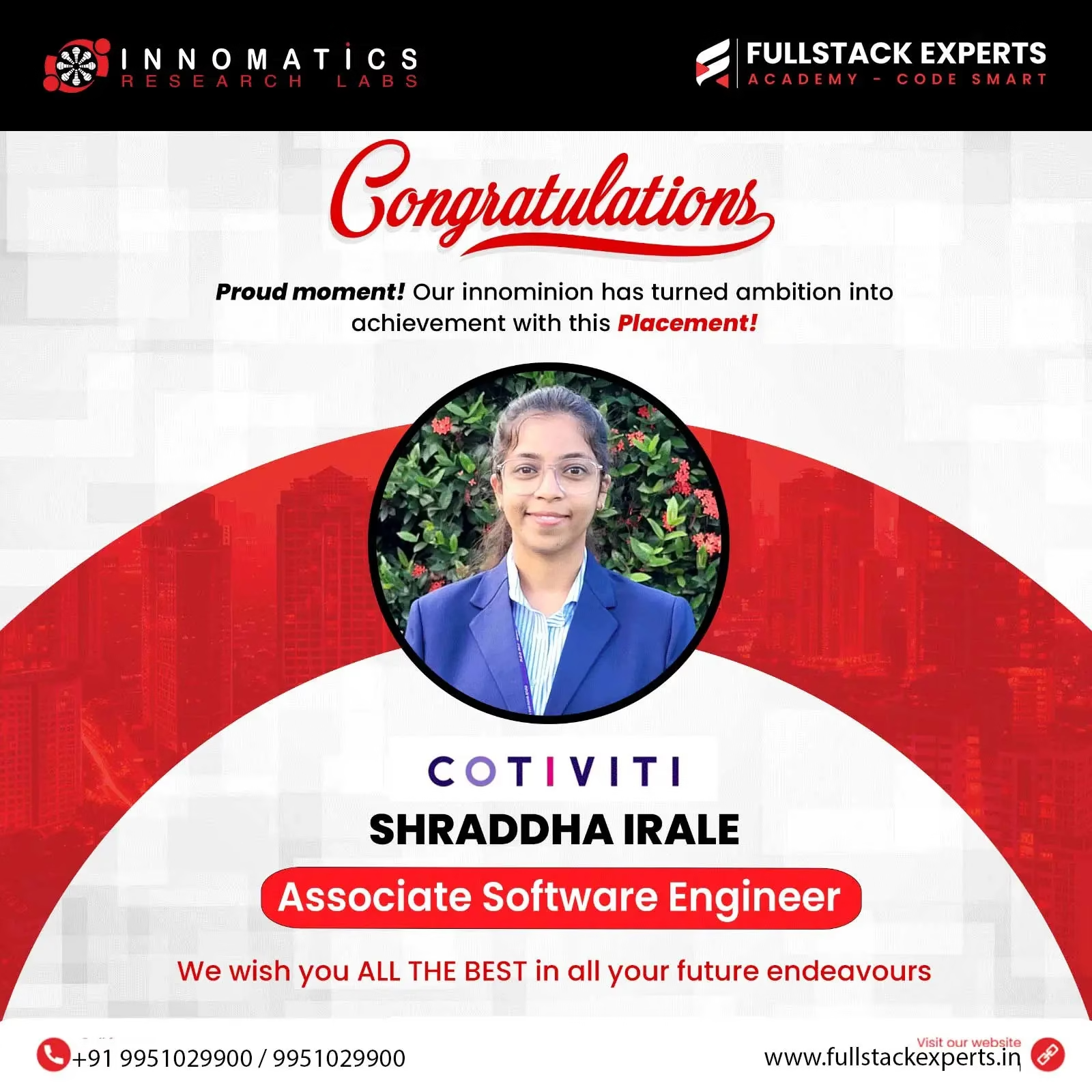
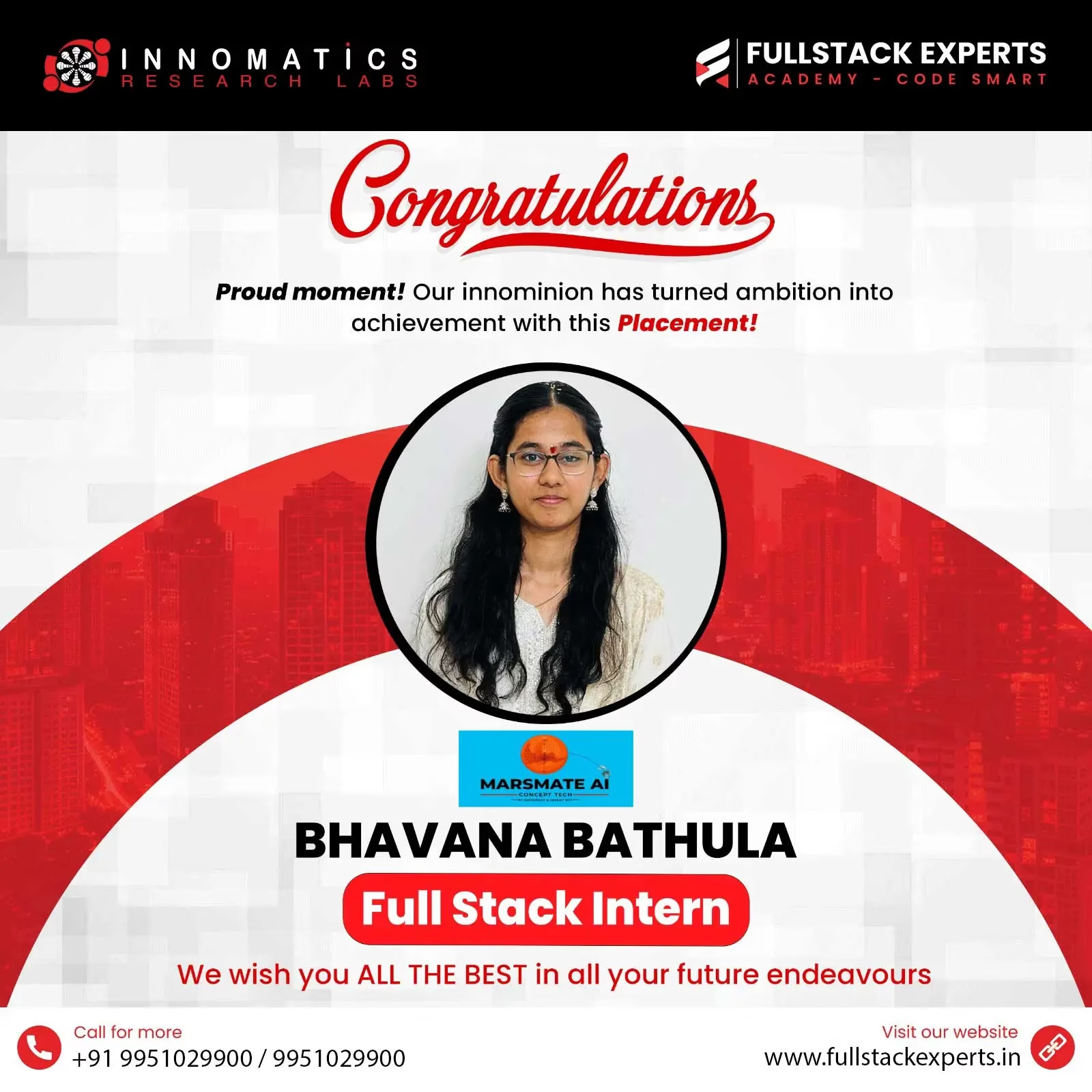
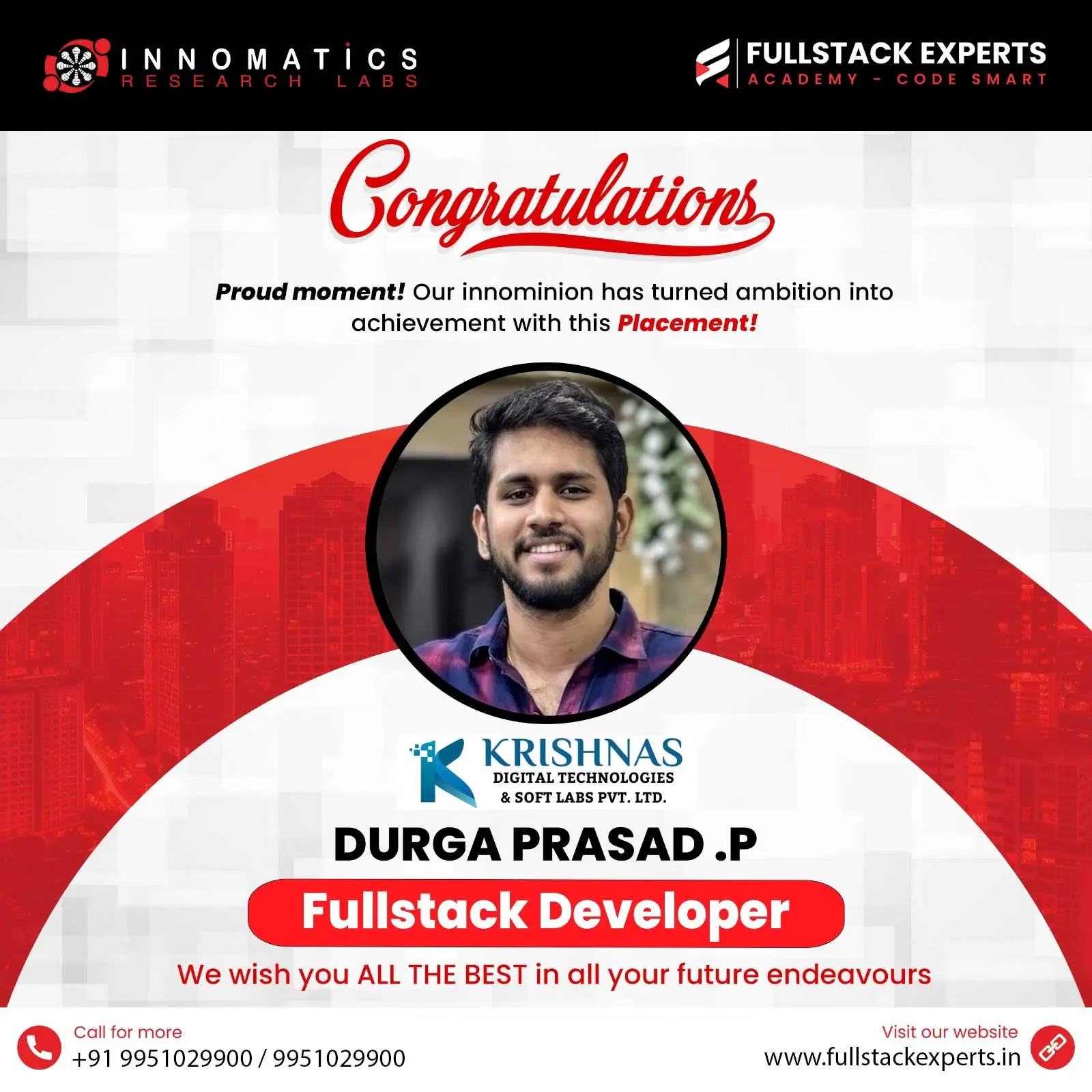
Success Stories from Our Student's

Students Excelling in Top Companies

General Queries & Answers

This program is designed for B.Tech and degree students (any stream), recent graduates, and working professionals who want to start or transition into a Full Stack Development career.


It is suitable for:


  • Beginners with no prior coding experience

  • Learners with basic programming knowledge seeking structured training

  • Professionals aiming to upgrade with Full Stack, DSA, and AI skills

The curriculum starts from Python fundamentals and progresses to advanced development concepts.

The curriculum provides comprehensive, industry-oriented training across multiple domains:


Programming:
Python (Core to Advanced), OOP, Iterators, Generators, Exception Handling


Frontend Development:
HTML5, CSS3, Bootstrap, JavaScript (ES6), React.js


Backend Development:
Django, Flask, MVT Architecture, Authentication, Admin Panel


Databases:
MySQL, PostgreSQL, MongoDB, ORM, CRUD Operations


APIs & Tools:
REST API Development, JSON, Client–Server Architecture, Postman
Git and GitHub for Version Control


Data Structures & Algorithms (DSA):
Arrays, Linked Lists, Trees, Graphs, Dynamic Programming, and coding interview preparation


Generative AI Integration:
AI coding assistants, prompt engineering, debugging, optimization techniques, and responsible AI practices

The program follows a project-based learning approach with strong practical exposure, including:


  • Full Stack web applications using Django/Flask and React

  • REST API development and integration

  • Database-driven enterprise applications

  • Capstone projects combining Full Stack, DSA, and AI

Students also receive:


  • Coding challenges and assignments

  • Interview preparation modules

  • Mock interviews and technical assessments

This ensures learners build a strong, job-ready portfolio.

The program consists of 10 comprehensive modules delivered through:


  • Live mentor-led interactive sessions

  • Hands-on coding practice

  • Real-time projects

  • Assignments and coding challenges

Students also receive full LMS access, including:


  • Session recordings

  • Study materials and notes

  • Practice resources

  • Project guidance

This structured format ensures both conceptual clarity and practical mastery.

Yes. Full Stack Experts Academy provides structured placement assistance, including:


  • Resume building and LinkedIn profile optimization

  • Coding interview preparation

  • Mock interviews and technical evaluations

  • Referral support and job readiness training

The integrated Full Stack + DSA + Generative AI curriculum, combined with live mentorship and continuous practice, makes this program industry-aligned and career-focused.

Full Stack Experts Academy empowers you with Full Stack Development, DSA, and Generative AI skills. Build real-world projects and launch your tech career.

Contact Details:

Beside JNTU Metro Station,Plot 1, Vasanth Nagar Main Rd, Hydernagar, Kukatpally, Hyderabad, Telangana 500085

Start Learning Today

popup Enquiry form